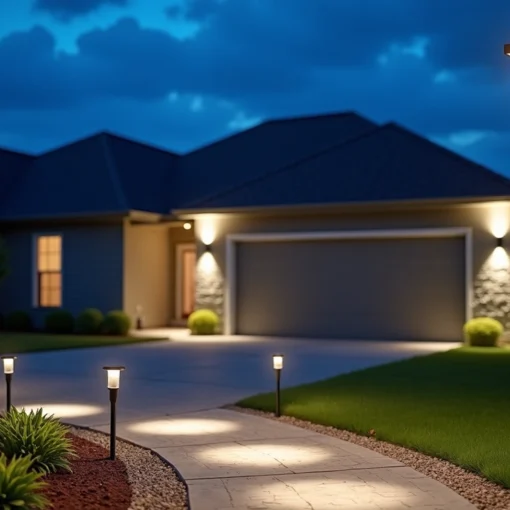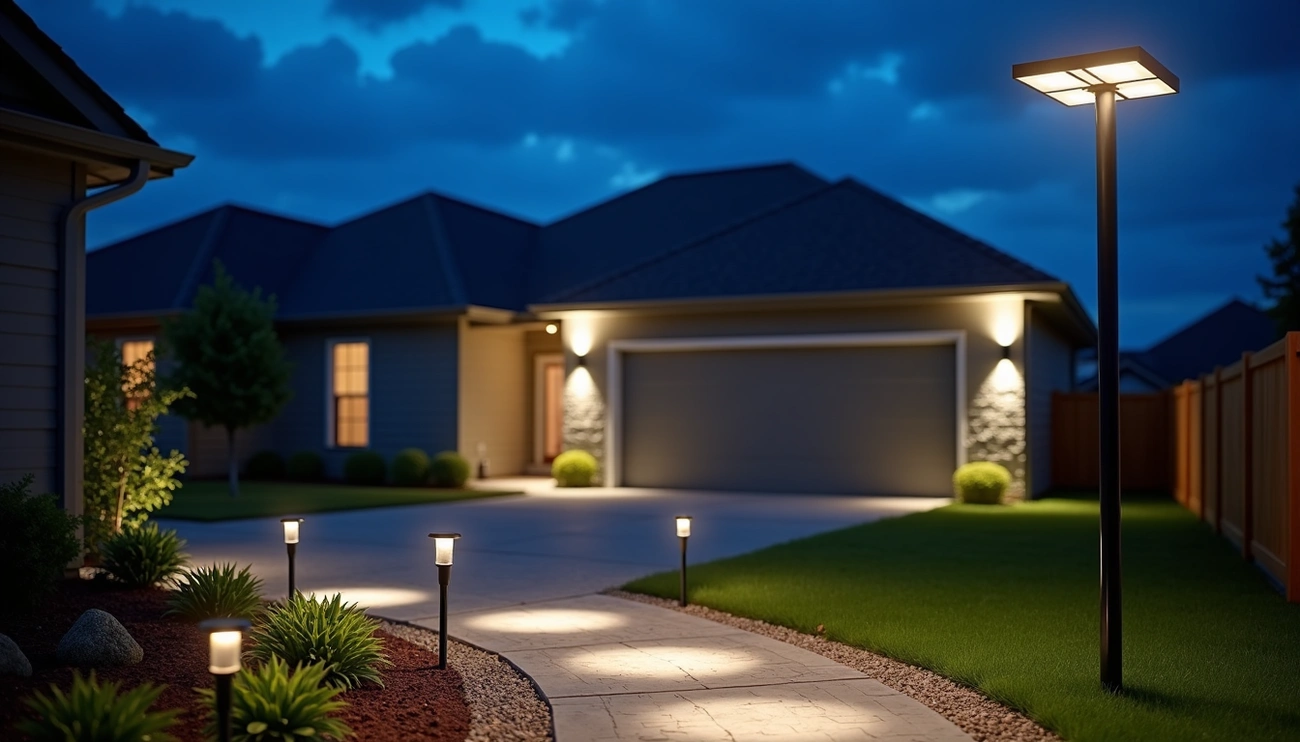
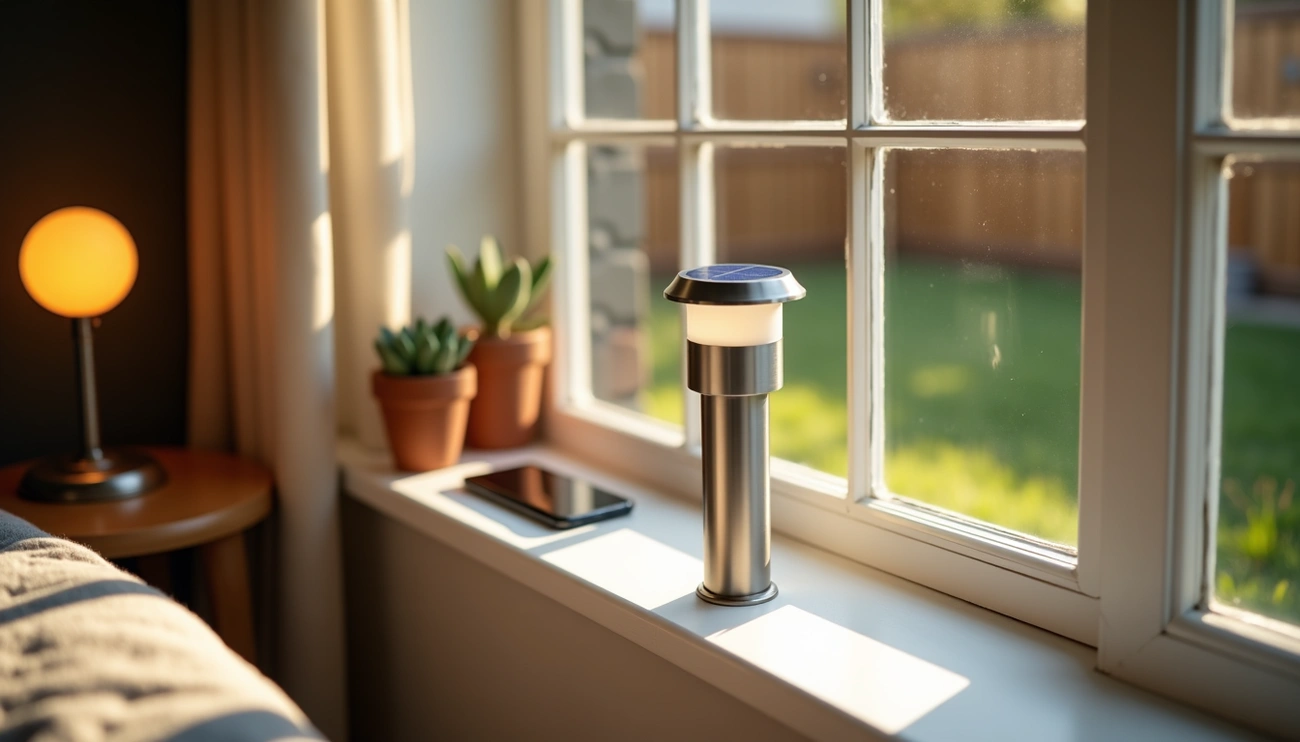
Solar lights can charge indoors, but indoor charging works slower than direct sunlight. Place the light on a sunny windowsill or under a bright LED or incandescent lamp. Some models also support USB charging. Indoor charging typically requires 6–12 hours to reach a full battery.
Understanding How Solar Lights Work
Solar lights operate through a self-contained system where multiple components work together to capture, store, and release energy. Understanding this mechanism helps explain why indoor charging presents challenges and how to work around them.
Key Components of Solar Lights
Every solar light contains five primary elements that enable its function. The solar panel sits at the top, housing photovoltaic cells that capture light energy. These cells are typically made from crystalline silicon, which holds a 95% market share in commercial applications. Below the panel, you’ll find the battery, which stores converted energy for later use. Most modern units use lithium-ion batteries, though NiMH and lead acid varieties remain common in budget models.
The controller board manages energy flow between components and prevents overcharging. Attached to this board is a photoresistor, a light-sensitive device that detects darkness and triggers the lights automatically. Finally, LEDs serve as the light source because they require minimal power and produce light through electroluminescence when current passes through them.
The Charging Process Explained
When light hits the solar panel, photovoltaic cells convert that radiation into electrical current through what scientists call the photovoltaic effect. In essence, each cell consists of semiconductor layers with positive and negative conductors. Incoming light radiation excites negatively-charged electrons, forcing them into the positively-charged layer. Instead of bouncing back, these electrons slide off the cell into the battery as electrical current.
This process works with both sunlight and artificial light because solar cells respond to similar wavelengths and spectrum. However, the intensity matters significantly. Solar lights typically need 4 to 10 hours of direct sunlight to fully charge, while more robust outdoor solar lights require only 6 to 8 hours.
The charging happens in stages. During bulk charging, the battery receives maximum current until it reaches 80 to 90% capacity. Absorption charging then applies constant voltage while reducing current as the battery approaches full charge, preventing overheating and excessive gassing. Once the battery hits approximately 98% charge, float charging maintains maximum capacity throughout the day. Some systems also use equalization charges every 2 to 4 weeks to balance individual battery cells.
Battery Storage and Light Output
Batteries convert electrical energy into chemical energy for storage, then reverse the process when the lights activate. This chemical reaction, called electrolysis, transforms stored energy back into usable electrical form to power the LEDs. The photoresistor monitors ambient light levels, and when darkness falls below a preset threshold, it signals the controller board to activate the circuit.
A fully charged solar light can run 8 to 12 hours, depending on battery capacity and brightness settings. Battery capacity is measured in milliamp hours (mAh), where higher ratings mean longer runtime. For example, a 10-watt LED running for 8 hours on a 12-volt battery needs at least 667 mAh.
Battery lifespan typically ranges from 5 to 15 years, though proper maintenance can extend this. Temperature plays a crucial role in battery health. Batteries exposed to temperatures below 30°F require higher voltage to reach maximum charge, while those exceeding 90°F risk overheating and need reduced voltage. Both situations affect longevity, which is why protecting batteries from extreme conditions matters for long-term performance.
Can You Charge Solar Lights Inside?
Yes, But With Limitations
You can charge solar lights indoors, but the effectiveness depends heavily on your light source. The reality is that most solar lights work best with direct sunlight due to its intensity, which proves difficult to replicate inside your home. When you bring outdoor solar lights into your house, the location matters significantly.
Placing your solar lights near windows enhances their exposure to natural light. Surprisingly, solar lights can charge through glass because the photovoltaic cells are sensitive enough to capture the right light wavelengths. However, you’ll notice reduced sunlight intensity slows down the charging process considerably.
If natural light isn’t available, you can use indoor lighting options like incandescent or LED bulbs. Incandescent light is usually the most effective option because it emits a similar spectrum of light to sunlight. LEDs and fluorescent lights also work, but they often require longer exposure times to achieve a full charge. Specifically, artificial lighting takes about 2 to 5 hours more than outdoor sunlight. Depending on the wattage of your bulb, you might need up to 12 hours for a complete charge. For best results, use bulbs between 40W to 100W.
Position your solar lights right under or very close to the artificial light source for several hours to maximize the charging process. One critical mistake to avoid: never attempt to charge your solar panels while the lights are running at night. Trying to add energy to a battery while it’s lit can damage the unit and lead to a loss in sensitivity, making the lights less effective during daylight hours.
Indoor vs Outdoor Charging Performance
The performance gap between indoor and outdoor charging is substantial. Indoor solar typically produces power in the microwatt to milliwatt range, whereas outdoor panels generate significantly more energy under direct sunlight. This difference stems from light intensity and spectrum variations.
Artificial light sources emit differently from the sun, which directly affects how much usable energy your solar panel harvests. While outdoor charging delivers optimal results in 4 to 10 hours, indoor charging extends this timeframe considerably. Incandescent bulbs provide better performance than LED sources because they emit both heat and light that help charge solar panels more effectively.
Interestingly, cold weather offers an advantage for indoor window charging. During colder temperatures, electrons inside the solar panels won’t have excessive movements, which renders a higher voltage difference and produces more energy.
When Indoor Charging Makes Sense
Indoor charging becomes a practical option during inclement weather or winter months. You can use various light sources available in your home to ensure your solar lights receive adequate energy, even without direct sunlight.
Some people keep outdoor solar lights as emergency equipment indoors in preparation for power outages. This approach provides backup lighting without relying on grid power. Likewise, if you live somewhere that rarely sees the sun, indoor charging offers a viable alternative to keep your solar lighting systems functional.
Window charging works particularly well as a temporary solution, though solar lights remain much more efficient outdoors in natural daylight. For lightweight solar lights, bringing them indoors to charge near windows or under artificial lighting provides flexibility when outdoor conditions aren’t favorable.
How to Charge Solar Lights Without Sun
Several practical methods exist for charging solar lights when direct sunlight isn’t available. Each approach offers different effectiveness levels, and choosing the right one depends on your specific situation and available resources.
Using Incandescent Bulbs
Incandescent bulbs emit light wavelengths that photovoltaic cells can absorb. For this purpose, position the bulb a few inches away from the solar panel surface to maximize light absorption. The proximity matters because light intensity decreases rapidly with distance.
Strong incandescent lighting can effectively charge solar panels and provide the batteries with needed power. However, this method requires patience. Charging time ranges from 6 to 12 hours depending on bulb wattage. Higher wattage bulbs deliver faster results, though even a 100-watt incandescent bulb generates far less charging potential than direct sunlight.
One consideration: incandescent bulbs convert only about 10% of their energy into visible light, with the rest becoming heat. This stacked inefficiency means you’ll spend more on electricity than the solar panel produces, making this option practical only if you’re already using the bulb for another purpose.
Using LED Light Sources
LED lights serve as an alternative because they cover a larger range of spectrum, potentially offering more benefits than incandescent sources. Battery-operated LED lights, such as flashlights, can charge solar panels when you lack access to indoor lighting, making them useful for camping situations.
LEDs are more energy-efficient and emit less heat compared to incandescent bulbs, making them a better choice for indoor charging. Position your solar panel as close as possible to the LED source, ideally within a few inches. High-efficiency LED bulbs like headlamps and torches provide quicker charging. Expect to leave your lights charging for 10 to 12 hours when using LED sources.
Charging Near Windows or Skylights
Placing solar lights near windows during daylight hours provides natural light exposure without outdoor placement. Solar lights can charge through glass because photovoltaic cells remain sensitive enough to capture the right wavelengths. South-facing windows typically catch the most daylight, and even overcast conditions can provide a charging boost.
Interestingly, cold days work better for window charging. Reduced electron movement in lower temperatures creates a higher voltage difference, producing more energy. Standard window glass transmits approximately 80 to 90% of visible light, though this percentage decreases with laminated or double-glazed units.
Using USB Chargers or Power Banks
Many solar LED lights now include built-in USB charging options. These allow direct connection to power banks, laptops, or wall sockets via cable. This flexibility ensures your lights remain functional regardless of external light conditions.
Check your solar light model for USB port availability. If equipped, simply connect it using a standard USB cable and let it charge like any phone or device. This method provides the most reliable indoor charging option when sunlight isn’t accessible.
Utilizing Portable Power Stations
Portable power stations offer backup energy storage that can charge solar lights during outages or off-grid situations. These units store solar energy in rechargeable batteries, providing reliable power when needed. While portable stations themselves require sunlight or high-output solar panels to charge effectively, they serve as intermediary power sources for your solar lights during extended periods without sun exposure.
Factors That Affect Indoor Charging Efficiency
Multiple variables determine how well solar lights charge indoors. Understanding these factors helps you optimize your setup for better performance.
Light Intensity and Spectrum
Light intensity directly controls charging effectiveness. Solar cells depend on light that closely resembles sunlight’s wavelengths. The short-circuit current from a solar panel increases linearly with light intensity. In practical terms, you need approximately 900 W/m² to achieve 15% efficiency, which represents 90% of peak sun conditions.
Different wavelengths produce varying results. Solar panels respond most efficiently to light in the visible spectrum, particularly wavelengths that match natural sunlight. Cool-white or daylight bulbs deliver more beneficial wavelengths compared to warm bulbs.
Distance From Light Source
Proximity matters significantly for indoor charging. Solar panels must sit very close to artificial light sources to capture usable energy. Even a few feet of separation can reduce light intensity dramatically, leading to negligible power output. Closer positioning provides more photons, so placing your panel within inches of the bulb produces better results than positioning it across the room.
Solar Panel Cleanliness
Dust and debris create barriers that block incoming photons. Dirty solar panels can lose between 5% and 20% of their energy output under normal conditions. Heavier accumulation sometimes causes losses up to 30%. In fact, if dust covers 50% of the surface area receiving light, your energy output drops by half. Even thin layers of dirt significantly decrease efficiency, with studies showing reductions of 10% to 25% from debris buildup.
Type of Artificial Light Used
Bulb selection affects charging performance. LED lights prove most efficient for solar applications due to higher visible spectrum output and lower heat emission. Fluorescent bulbs provide moderate efficiency. Incandescent sources rank as poor choices because most energy converts to heat rather than usable light.
Tips to Optimize Indoor Solar Light Charging
Getting better results when charging solar lights indoors requires attention to several factors that directly influence performance.
Position Panels for Maximum Light Exposure
Place your solar charger as close to a window as possible, ensuring maximum sunlight availability. A 45-degree angle facing south captures optimal energy. Accordingly, you should adjust the charger’s position periodically to track the sun’s movement throughout the day. For artificial light sources, position the panel 10 to 30 cm away depending on beam angle.
Keep Solar Panels Clean
Dust buildup reduces output up to 4.4% annually, while dirty panels can decrease efficiency by up to 25%. Use a soft, non-abrasive brush with mild soapy water and a microfiber cloth. Avoid detergents or ammonia-based cleaners that may cloud the panels.
Use Reflective Surfaces to Boost Light
Reflective surfaces placed directly under solar panels can increase energy output by 0.9% to 4.5% annually. Mirrors should be at least double the size of your panels to maximize indirect light.
Perform Deep Charging Sessions
Turn your light fixtures off for 48 to 72 hours monthly. This process gives batteries time to gather and store energy without immediate use, extending overall lifespan.
Choose the Right Light Source
High-CRI, high-intensity LED or full-spectrum fluorescent lights deliver the best indoor charging results. Position the bulb directly above the panel to maximize absorption.
Conclusion
Solar lights can charge indoors, but you’ll get far better results outdoors in natural sunlight. That said, indoor charging serves as a practical backup during winter months or bad weather. Whether you place them near windows, use incandescent bulbs, or connect USB chargers, the methods I’ve shared will keep your lights functional when outdoor conditions aren’t favorable.
For best results, clean your panels regularly and position them close to your light source. While indoor charging takes longer and produces less power, it certainly beats having non-functional solar lights. Use these strategies whenever you need them, but remember that direct sunlight remains your most efficient option.