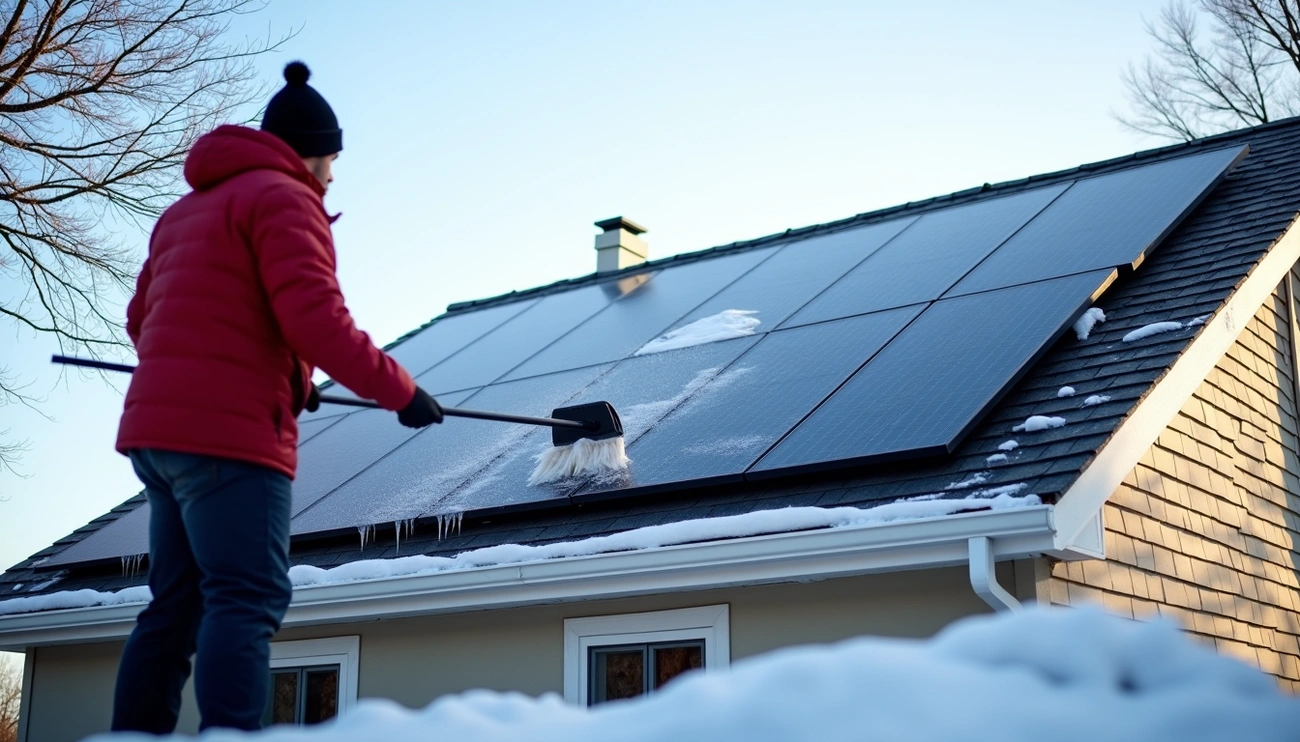
Clean snow off solar panels by using a soft-bristled broom, foam-head roof rake, or leaf blower from the ground. These tools remove snow without scratching the glass. Avoid metal shovels, harsh chemicals, or hot water because they damage panels and void warranties. Removing heavy snow restores solar power production.
Understanding How Snow Affects Solar Panel Performance
Do Solar Panels Work with Snow on Them?
Solar panels generate electricity through the photovoltaic effect, which depends on light rather than heat. This means panels continue producing power as long as sunlight reaches them, regardless of temperature. In fact, light can penetrate through 5 to 8-centimeter layers (2 to 3 inches) of snow, enabling panels to generate electricity even when covered. Panels with partial coverage or a light dusting may still produce 10-30% of their normal output.
Cold temperatures actually improve solar panel efficiency. For every 1°C drop below 25°C (77°F), energy output may increase by about 0.4-0.5%. Electrons move more freely in cooler temperatures, creating less resistance in electrical circuits and preventing efficiency losses from overheating. Consequently, panels perform better in winter despite shorter daylight hours.
Impact of Light vs Heavy Snow Coverage
A dusting of snow has minimal impact since wind can easily blow it off, and light can forward scatter through sparse coating to reach the panel. Research from the Northern Alberta Institute of Technology conducted over 5 years found that snowfall on photovoltaic solar panels results in about a 3% total annual energy loss, significantly less than the 20% drain that industry had traditionally estimated.
Heavy snow accumulation presents a different scenario. Thick or wet snow can block almost 100% of light, temporarily halting production. However, once snow starts to slide and slightly exposes the panel, power generation resumes. Average solar production in northern U.S. regions like Minnesota or Maine can drop by 10-30% during heavy snow months.
Why Snow Often Melts on Its Own
Solar panels are designed to absorb electromagnetic radiation efficiently. Even when ambient air temperature is 20°F, the dark silicon cells heat up when exposed to sunlight, including diffused light that penetrates cloud cover. Panels are typically 2°C (36°F) warmer than the ambient temperature. Once part of the panel is exposed to sun, it begins operating, which raises the surface temperature and leads to faster melting.
This creates a thin water layer at the contact point between snow and glass, acting as a lubricant that dramatically reduces friction. Combined with angled installation, gravity takes over and the entire sheet slides off, usually within 24 to 48 hours of the storm ending.
When You Should (and Shouldn’t) Remove Snow from Solar Panels
Signs That Snow Removal Is Necessary
Most situations don’t require intervention. However, specific conditions warrant removing snow from solar panels:
- Heavy, wet snow persisting 5-7 consecutive days that adheres to panel surfaces and doesn’t slide naturally
- Low-tilt or flat roof installations at less than 15-20 degrees where gravity won’t assist snow shedding
- Off-grid systems where every day of production matters, especially when battery reserves drain faster during reduced daylight hours
- Homes relying on solar for heating or backup power where winter production is critical for heat pumps or battery maintenance
For instance, if you get 8-10 snow events per winter with panels covered for an average of 2 days each, that’s roughly 16-20 days of reduced production out of 365 days, representing only a 4-5% impact.
Why Experts Recommend Waiting
Industry professionals advise against manual snow removal for several reasons. Winter conditions create dangerous situations for climbing roofs or handling equipment. Equally important, solar panels are highly sensitive, and scraping them with tools can cause damage, resulting in reduced performance or repair needs.
Panels retain warmth and shed snow quicker than ground surfaces or roofs. As a result, losing a day or two of production isn’t worth risking warranty coverage or personal safety. Many installers recommend homeowners seek professional help rather than attempting DIY removal.
Cost-Benefit Analysis of Snow Removal
Professional snow cleaning services cost between $10 and $20 per module. For a 10-module system, maintenance costs can reach $700. Major utility-scale companies spend approximately $8 per module annually exclusively for snow cleaning.
In reality, the financial benefit rarely justifies the expense. Annual production loss averages only 1-3% even in heavy snow climates. Consequently, most grid-tied homeowners spend more on professional removal than they would recover in electricity production.
How to Remove Snow from Solar Panels Safely: Proven Methods
If you decide removal is necessary, several safe methods exist for clearing snow from solar panels without causing damage.
Using a Roof Rake from the Ground
Roof rakes designed for solar panels feature foam heads made from non-abrasive, cross-linked polyethylene that won’t scratch panel surfaces. Telescopic poles extend from 16 to 30 feet, allowing you to reach panels while standing safely on the ground. The Snow Pro uses stiff foam construction, while the Snow Peeler incorporates a hard nylon blade with an attached slide that catches snow as you push upward. Start clearing from the bottom of your panels and work upward, giving accumulated snow a path to slide down.
Soft-Bristled Brushes and Manual Tools
Manual removal works well for accessible installations. Use a soft-bristled brush or non-abrasive cloth to gently sweep snow off panel surfaces. Never apply excessive force or use shovels, metal scrapers, or hard-bristled brushes, as these tools damage the protective glass coating and reduce efficiency. For ground-mounted systems positioned low to the ground, keep the area directly in front of panels clear so sliding snow doesn’t pile up and drift back onto the modules.
Professional Snow Removal Services
When snow proves too heavy or panels sit on steep, inaccessible roofs, professional technicians offer specialized services. They use modern equipment such as snow blowers and hot-air blowers to clear accumulation without harming your system. This option makes sense after extreme snowstorms when DIY methods aren’t feasible.
Preventive Solutions: Tilted Mounting and Heating Systems
Installing panels at angles between 45 and 60 degrees enables natural snow shedding through gravity. Heating mats placed around panels generate enough warmth to melt snow during winter months. Similarly, heated wires installed on your roof warm up when electricity passes through them, melting ice and snow accumulation. All-weather solar panels include automatic heating systems that activate during snowfall, melting snow immediately and maintaining continuous energy production.
Critical Safety Rules: What Not to Do When Clearing Snow
Improper snow removal techniques damage expensive equipment and create serious safety hazards.
Never Climb on an Icy Roof
Icy roofs are dangerous and slippery. Getting extra power while risking personal safety isn’t worth the fall risk that far exceeds the value of recovered electricity. Long-handled tools from the ground eliminate roof climbing entirely. Snow removal can be dangerous, especially on steep roofs. Moving around in cold, snowy, wet, and icy conditions takes considerable energy and stamina.
Avoid Sharp Tools and Metal Scrapers
Metal tools with sharp edges scratch the panel’s glass surface and damage cells. Shovels and metal scrapers void warranties. Instead of sharp objects, use non-abrasive tools specifically designed for solar panels. Walking directly on panels concentrates weight in small areas, potentially causing micro-cracks that worsen over time and lead to significant performance losses.
Don’t Use Hot Water or Harsh Chemicals
Sudden temperature change increases thermal shock chances and may crack the glass. Chemical sprays, antifreeze agents, and salt reduce glass clarity, lowering panel efficiency while corroding the panel’s frame. Rock salt and de-icers degrade the seals that keep moisture out of electrical junction boxes.
Why DIY Removal Can Void Your Warranty
Some cleaning tools and methods void warranties on solar panels. Damage from sharp tools or hot water leaves you paying for repairs yourself. Professional cleaning services understand warranty requirements and carry insurance coverage. Many commercial warranties specifically mandate professional cleaning to maintain coverage.
Conclusion
You now have everything you need to handle snow on your solar panels confidently. For the most part, patience is your best strategy since panels naturally shed snow within 24-48 hours. The minimal production loss rarely justifies the safety risks or potential panel damage from hasty removal.
When removal becomes necessary, prioritize safety above all else. Use proper tools from the ground, or better yet, hire professionals who understand warranty requirements. Your long-term solar investment is worth protecting.