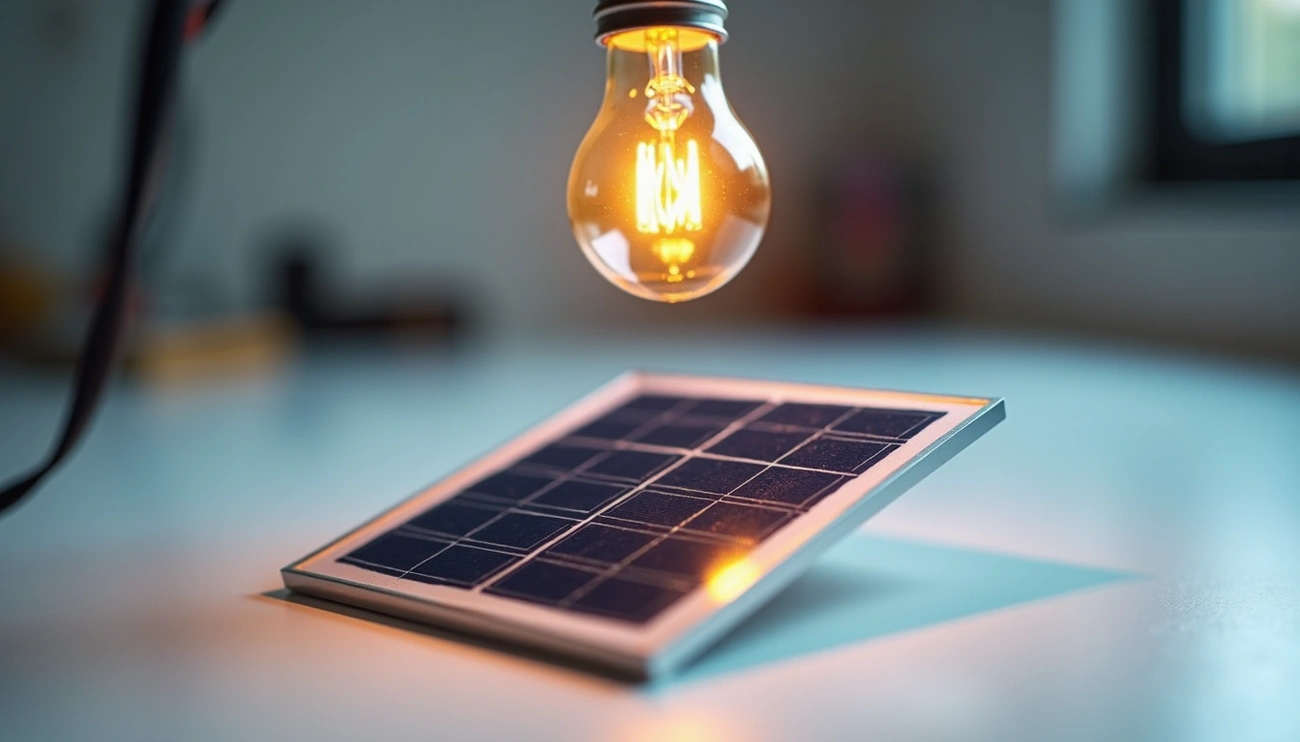
Solar panels can be charged by a light bulb, but the process is highly inefficient compared to sunlight. Solar cells convert artificial light from LED or incandescent bulbs into electricity. However, charging requires close exposure for about 6–12 hours and only produces a minimal charge, making it impractical for large batteries.
Can You Charge Solar Panels With a Light Bulb? The Short Answer
Yes, It’s Technically Possible But Not Practical
Light bulbs can charge solar panels, but the output remains far too low for meaningful applications. Solar panels respond to artificial light sources and generate some electricity, yet this process proves wildly inefficient. You’ll spend more on the electricity powering the bulb than you’ll ever recover in stored solar energy. The physics work the same regardless of light source. When photons hit solar cells, they excite electrons and create electrical current. However, artificial lights produce a fraction of the energy density that makes solar panels viable.
What the Science Actually Says
The performance gap between artificial light and sunlight is staggering. Under bright indoor lighting at around 500 lux, a standard solar cell produces approximately 0.1 to 0.5 watts per square meter. In contrast, that same panel generates 150 to 200 watts per square meter under direct sunlight. Natural sunlight delivers roughly 100,000 lux at noon on clear days, while bright indoor spaces provide only 300 to 1,000 lux. This means you’re getting less than 1% of the sun’s charging power from even your brightest household lights. Studies show artificial light produces only about 10 to 25% of the energy capture compared to direct sun exposure. The energy conversion creates a double loss problem. Incandescent bulbs convert merely 10% of their energy into visible light, with the rest becoming heat. Solar panels then convert only 15 to 20% of that light into electricity.
Why Most People Ask This Question
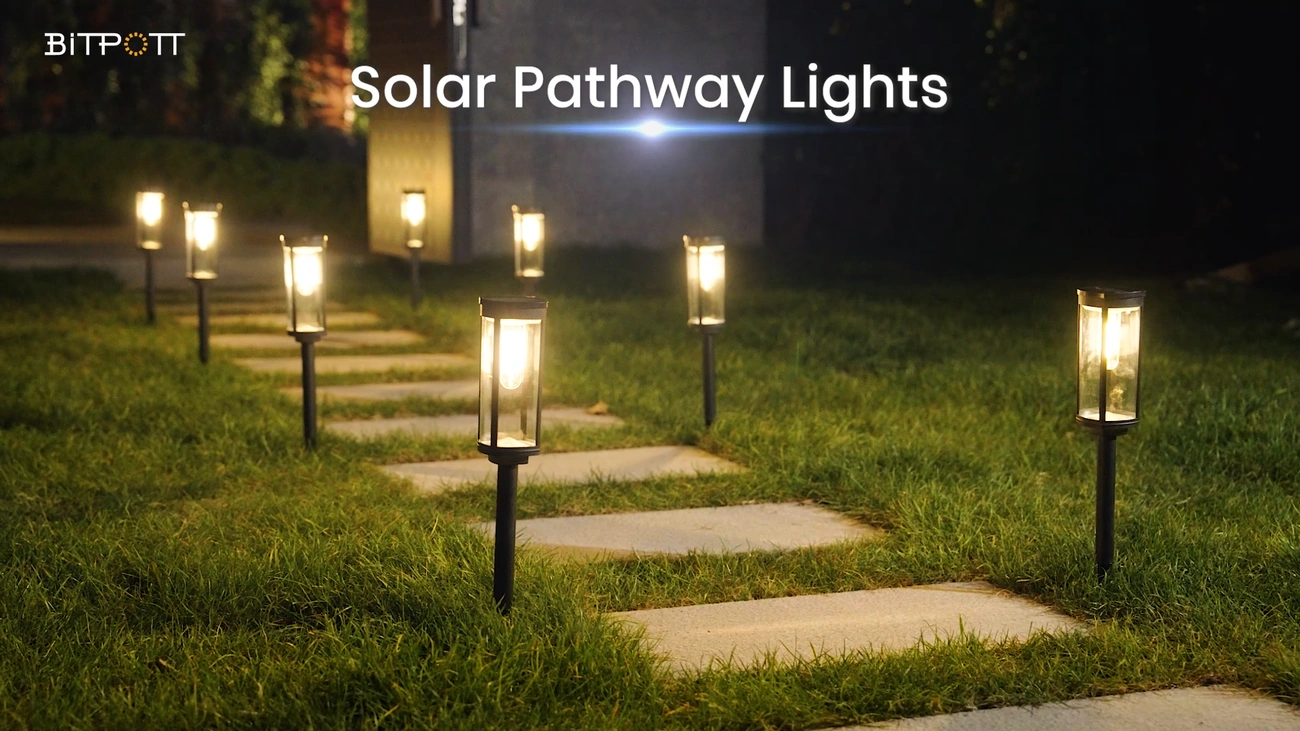
People usually raise this question when facing cloudy weather or attempting to maintain solar lights indoors. Some want to keep solar-powered garden lights functional during winter months. Others hope to charge small devices without sunlight access. The question also surfaces during emergencies when natural sunlight becomes unavailable. In reality, artificial light charging works only for ultra-low-power devices like solar calculators and watches. These gadgets require minimal energy and are specifically designed for low-light environments. For anything beyond tiny devices, the math simply doesn’t work in your favor.
How Solar Panels Capture and Convert Light Energy
The Photovoltaic Effect Explained Simply
The photovoltaic effect converts light into electricity when photons strike semiconductor materials. French physicist Edmond Becquerel discovered this phenomenon in 1839 while experimenting with electrolytic cells. Solar panels contain silicon layers treated with different elements. The top layer receives phosphorus doping, adding extra electrons with negative charge. The bottom layer gets boron doping, creating positive charge. When photons hit these cells, they energize silicon electrons and free them from their atoms. This creates electron-hole pairs that flow toward the positively charged layer, generating direct current. The electric field at the junction between layers forces electrons to move in a specific direction, producing measurable electrical current.
Why Solar Panels Are Designed for Sunlight
Sunlight delivers 1,366 watts per square meter at the top of Earth’s atmosphere. After passing through atmospheric filtration, this drops to 1,120 watts, with Standard Test Conditions set at 1,000 watts per square meter. Natural sunlight contains approximately 4% ultraviolet, 43% visible light, and 53% infrared energy. Solar panels primarily convert visible light and nearly half the infrared spectrum into electricity. Silicon solar cells can absorb wavelengths from ultraviolet through near-infrared, with peak efficiency occurring around 1.12 eV. Most energy production comes from the visible spectrum, accordingly making sunlight the optimal energy source.
The Role of Light Wavelengths and Intensity
Light intensity directly affects solar panel output. Open circuit voltage, short-circuit current, and maximum output power all increase with rising light intensity. Short-circuit current increases linearly with light intensity, while open circuit voltage rises logarithmically. Visible light wavelengths range from 390 nanometers to 700 nanometers. Silicon panels experience a sharp cutoff at 1,100 nanometers, as longer wavelengths pass through silicon atoms without effect.
Band Gap and Energy Conversion Basics
Band gap represents the minimum energy required for an electron to break free from its bound state. Silicon has a band gap energy of 1.11 eV at room temperature. Photons must carry energy greater than this threshold to generate electricity. The ideal photovoltaic material has a band gap between 1.0 and 1.8 eV. Photons exceeding the band gap energy convert only the equivalent amount, with excess energy becoming heat.
Which Light Bulbs Can Charge Solar Panels and How Well
Not all bulbs perform equally when attempting to charge solar panels. The type of artificial light source determines how many photons reach the photovoltaic cells and how much usable energy gets generated.
Incandescent Bulbs: The Most Effective Option
Incandescent bulbs produce the broadest light spectrum among household options, making them the most effective for solar charging. A 100-watt incandescent bulb generates more charging potential than a 40-watt version because more photons hit the panel surface. However, these bulbs convert only 10% of their energy into visible light, with the remainder becoming heat. This inefficiency creates a fundamental problem where the electricity consumed far exceeds any energy recovered.
LED Bulbs: Modern but Limited
LED bulbs convert approximately 20-30% of their energy into usable light, making them more efficient than incandescent options at electricity-to-light conversion. Despite this advantage, LEDs emit fewer high-energy photons and produce a narrower spectral range. Cool-white or daylight LEDs perform better than warm bulbs for solar applications.
Fluorescent and CFL Bulbs: Poor Performers
Fluorescent and CFL bulbs deliver 50-70 lumens per watt but remain poor choices for solar charging. These bulbs contain barriers such as glass and ballasts that absorb or diffuse light before it reaches the panel. Their spectral output experiences sharp fluctuations that reduce overall energy absorption.
Halogen Bulbs and Their Charging Capability
Halogen bulbs produce 16-25 lumens per watt, positioning them between incandescent and LED options. Most energy radiates as infrared rather than wavelengths matched to photovoltaic spectral response.
Distance, Wattage, and Exposure Time Factors
Higher wattage bulbs placed closer to solar panels yield better results. The closer the artificial light sits to the panel, the more photons reach the photovoltaic cells. Extended exposure remains essential, typically requiring 6-12 hours for even minimal charge.
Why Charging Solar Panels With Artificial Light Is Inefficient
The Energy Loss Problem
Artificial light charging creates a wasteful loop where electricity converts to light, then back to electricity. During this double conversion, a percentage of energy disappears at each stage. An artificial light source must first transform grid electricity into photons, which solar cells then absorb and convert back into electrical energy. You’re stacking inefficiencies on inefficiencies, making the entire process economically absurd.
Spectral Intensity Differences Between Sunlight and Bulbs
Sunlight delivers spectral radiance that remains strong and constant across a wide variety of wavelengths. Artificial lights produce weaker spectral irradiance and experience sharp fluctuations that reduce overall energy absorption. Natural sunlight provides a full spectrum including visible light, ultraviolet, and infrared radiation, all matched to what solar panels need. Artificial lights emit narrower, weaker spectrums. Even on cloudy days, natural sunlight provides roughly 10 times more charging power than indoor lighting.
Cost Analysis: Electricity In vs. Energy Out
You’ll spend more on electricity powering the bulb than you’ll ever recover in stored solar energy. There’s no scenario where this math works in your favor. The energy required to run artificial lights exceeds what solar panels can produce from them.
When It Might Make Sense (If Ever)
Emergency situations represent the only legitimate use case. A bright LED light source can provide limited charging for ultra-low-power devices such as LED lamps or environmental sensors. While inefficient, it serves as backup when natural sunlight remains unavailable.
Conclusion
While solar panels technically respond to artificial light, the energy math never works in your favor. You’ll spend far more on electricity powering bulbs than you’ll recover in solar energy. Despite the technical possibility, I recommend sticking with natural sunlight for any meaningful charging needs. The only exception? Emergency situations with ultra-low-power devices. Otherwise, artificial light charging remains an expensive experiment that defies basic economics.