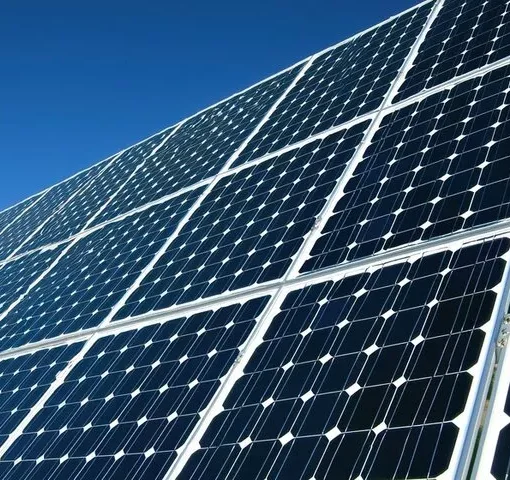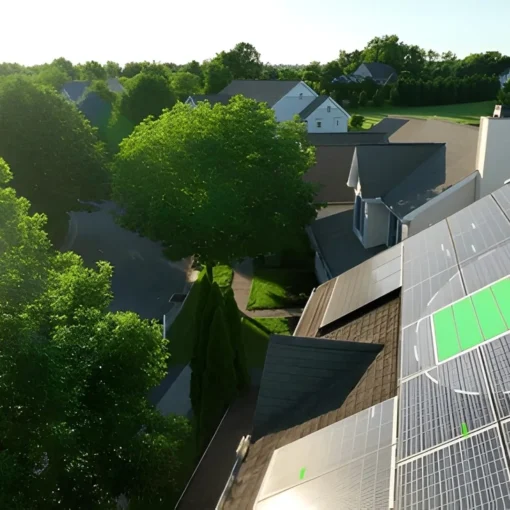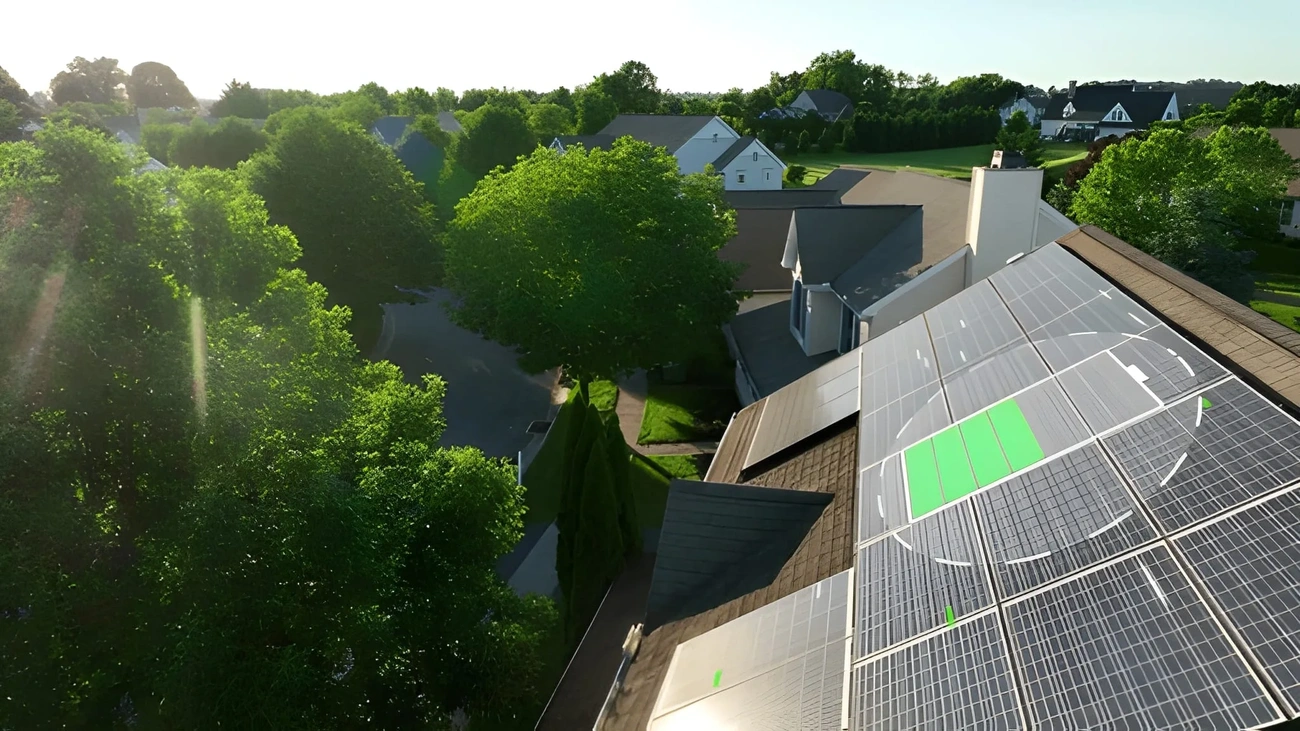
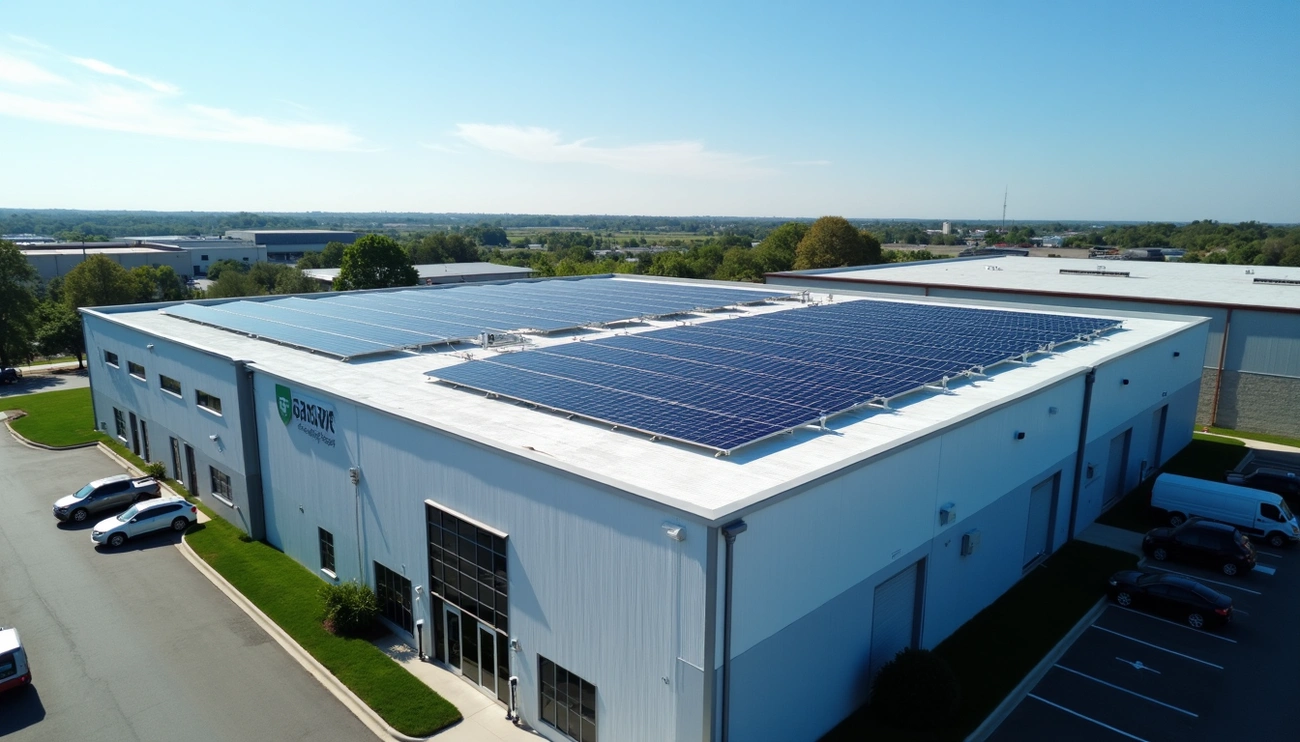
Commercial solar panels are worth the investment because they reduce business electricity costs and deliver payback within 3–7 years. Businesses benefit from lower operating expenses, tax credits, and increased property value. Solar systems also protect companies from rising utility rates and strengthen brand reputation through visible sustainability efforts.
Understanding Commercial Solar Panels Cost in 2026
Commercial solar installation cost sits between $1.83 and $3.50 per watt before incentives in 2026, with most businesses paying around $2.00 per watt for standard rooftop installations. After applying the 30% federal tax credit and local rebates, commercial solar panels cost drops to $1.20 to $1.75 per watt. Recent market data shows average commercial installations range from $1.40 to $1.80 per watt, though this variance depends on electrical infrastructure complexity and whether you’re installing a standard rooftop array or a more complex industrial setup.
Average installation cost per watt
The per-watt metric provides an apples-to-apples comparison across different solar panels for business projects. According to SEIA data, commercial solar systems averaged $1.46 per watt in recent quarters. In detail, government benchmarks for 3 MW commercial systems show costs of $1.34 per watt for modular service providers and $1.51 per watt for modified mounting platforms. Panel prices alone range from $0.20 to $0.40 per watt, with monocrystalline options costing $1.00 to $1.50 per watt for their higher efficiency.
System size and pricing factors
Larger commercial solar power systems benefit from economies of scale. A 100 kW system might run $2.00 per watt, while a 500 kW installation could drop to $1.66 per watt. Small businesses installing 15 to 25 kW systems pay $37,500 to $87,500 before incentives, whereas large facilities with 300 to 350 kW systems invest $750,000 to $1,225,000.
Equipment costs: panels, inverters, and mounting
Solar panels represent 35-40% of your total commercial solar installation cost. Inverters, which convert DC electricity to usable AC power, account for 20-25% of total costs. Monocrystalline panels deliver 20-23% efficiency but cost more upfront, while polycrystalline panels provide 15-17% efficiency at lower prices. Balance of system components including mounting structures, cables, and electrical panels comprise roughly 36% of total costs.
Labor and installation expenses
Installation labor represents 15-20% of your total cost, covering site preparation, panel mounting, electrical connections, and system commissioning. Labor costs vary from $1.00 to $3.00 per watt depending on location, project complexity, and terrain. Professional crews typically complete most commercial projects in 1-3 days.
Financial Benefits and Real ROI for Businesses
Financial returns from solar panels for business represent one of the strongest cash-flow decisions available in 2026. Commercial solar power savings begin immediately after installation and compound over decades, creating predictable cost reductions that directly impact your bottom line.
Monthly electricity bill savings
The average mid-sized business saves approximately $101,259 in electricity costs over 20 years with solar. Assuming your system covers 100% of electricity needs, monthly bill elimination translates to roughly $2,500 in annual savings. Businesses typically reduce energy expenses by 30-70% over their system’s lifetime, with actual savings depending on consumption patterns and local utility rates.
Protection against rising energy rates
Commercial electricity rates climbed 4.4% year-over-year to 12.96 cents per kWh nationally, with energy cost escalation closer to 4% annually in many markets. By generating your own power, you lock in energy costs at an equivalent rate of 4-6 cents per kWh versus 12-14 cents from the grid. Solar effectively shields your business from utility rate volatility for decades.
Federal tax credits and incentives
The federal Investment Tax Credit provides 30% of your total system cost as a direct tax credit. This dollar-for-dollar reduction in tax liability can increase to 40% or even 50% when you stack the 10% domestic content bonus and 10% energy community adder.
Depreciation benefits (MACRS and bonus depreciation)
Solar qualifies for Modified Accelerated Cost Recovery System depreciation over five years, allowing you to deduct 85% of your tax basis after accounting for half the ITC value. Combined with 100% first-year bonus depreciation currently available, a $1,000,000 system generates $300,000 in tax credits plus $178,500 in depreciation tax savings. These stacked incentives cover nearly 47% of total project costs.
Typical payback periods for commercial systems
Most commercial installations reach payback in 4-6 years, though some businesses see returns in as little as 3 years. Average payback across all commercial systems sits at 9.05 years.
Long-term value and energy independence
Solar systems maintain productive lifespans of 25-30 years. After your payback period, you receive 20+ years of nearly free electricity, with total lifetime savings often exceeding $250,000.
Key Factors That Impact Your Solar Investment
Several performance variables determine whether solar panels for business deliver projected returns over their operational lifetime.
Commercial solar panel efficiency ratings
Commercial solar panel efficiency ranges from 17% to 24%, with monocrystalline panels achieving 20-23% conversion rates compared to polycrystalline’s 15-19%. Premium options like Mission Solar reach 22.8% efficiency, while TOPcon modules now dominate new commercial projects for their higher output. Higher efficiency means more power per square meter, allowing businesses to maximize output on constrained rooftops.
Roof space and sunlight access requirements
South-facing roofs capture maximum sunlight in the continental U.S., though east-west configurations lose only 10-15% annual production. Fire codes require access pathways around arrays, reducing usable roof area. Structural assessments verify roofs can support ballasted systems or accommodate attached racking. At least 82% of U.S. buildings receive sufficient sunlight for solar viability.
Maintenance costs and system lifespan
Annual maintenance averages $200 to $500 for routine cleaning and inspection. Inverters require replacement every 10-15 years at $1,000 to $5,000. Systems last 25-35 years with degradation rates of 0.5-0.8% annually. Panels retain 80-90% efficiency after 25 years.
Business energy consumption patterns
Facilities consuming energy during peak daytime hours achieve optimal solar offset. System sizing matches monthly consumption patterns to minimize grid exports.
Making the Decision: Is Commercial Solar Right for Your Business?
Your business decision hinges on four critical factors that transform abstract projections into concrete financial outcomes.
Calculating your specific ROI
Start by dividing total system cost after incentives by annual electricity savings to determine payback period. For instance, a 200 kW system costing $500,000 drops to approximately $350,000 after the 30% federal tax credit. Producing 260,000 kWh annually at $0.13 per kWh saves about $33,800 in year one.
Financing options: cash, loans, and PPAs
Cash purchases deliver highest overall returns by capturing all tax incentives and 100% energy savings immediately. Commercial solar loans finance 70-100% of costs with 7-12 year terms structured so energy savings exceed loan payments from month one. Power Purchase Agreements require zero upfront investment, offering electricity 15-30% below utility rates for contract terms spanning 10-25 years, though PPA rates typically escalate 1-5% annually.
When solar makes the most sense
Businesses paying high electricity rates with significant daytime consumption patterns see quickest returns. Properties with strong tax appetite maximize depreciation and credit benefits immediately.
Working with the right installer
Select contractors certified by the North American Board of Certified Energy Practitioners with at least three years of installation experience. Obtain multiple proposals that include site-specific energy production estimates and transparent financial analysis covering incentives, tax benefits, and projected ROI.
Conclusion
Commercial solar panels deliver compelling financial returns for most businesses in 2026. Due to the 30% federal tax credit, accelerated depreciation, and protection against rising utility rates, your investment typically pays for itself within 3-6 years while the system generates savings for 25-30 years. If your business has significant daytime energy consumption and strong tax appetite, solar is without doubt worth serious consideration. Just remember to act before the July 4, 2026 tax credit deadline expires.