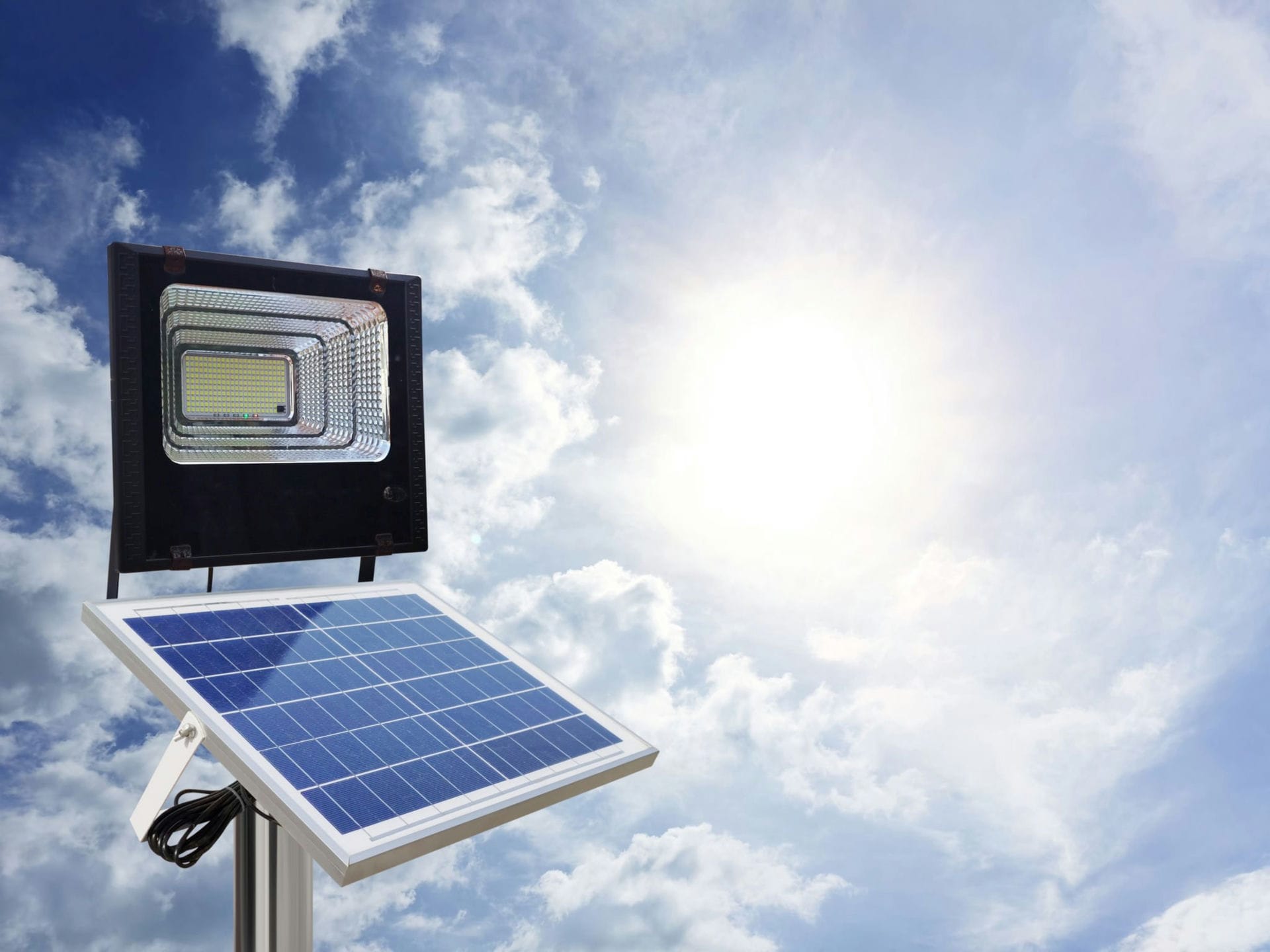
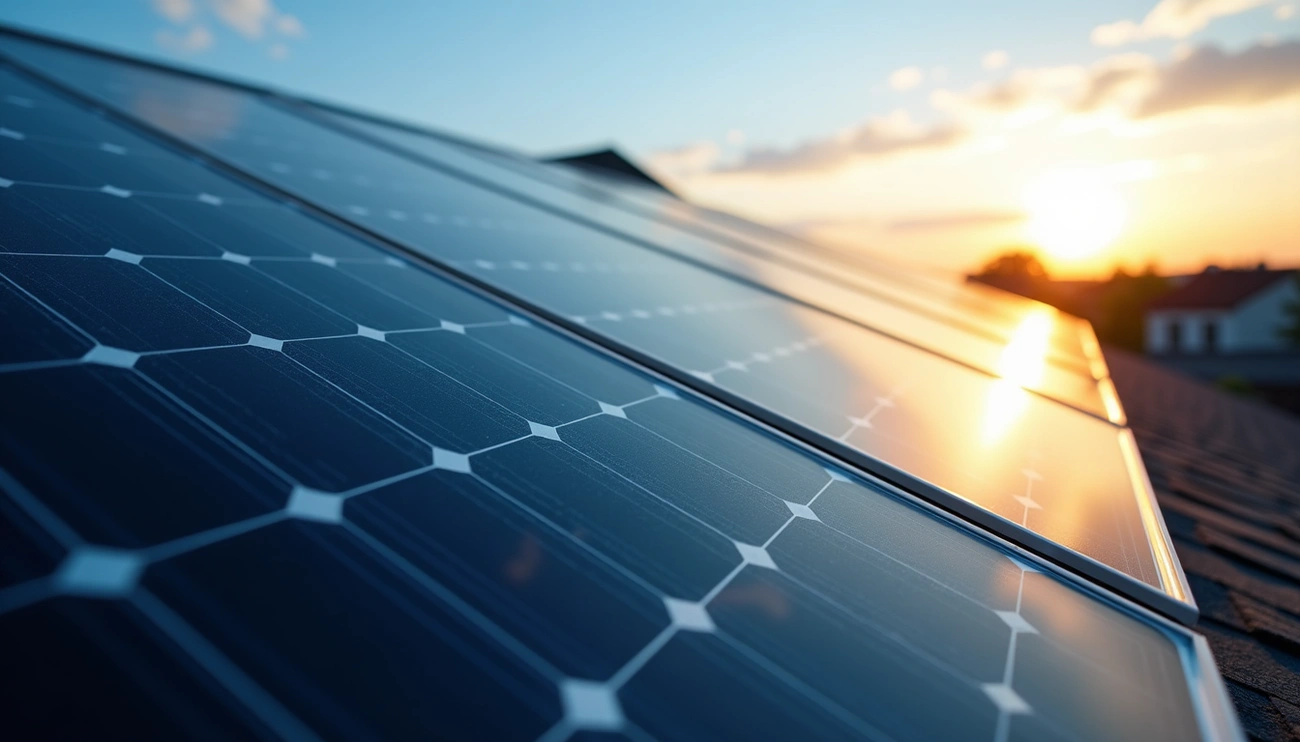
Solar panels are blue because they use polycrystalline silicon cells. Manufacturers create these cells by melting raw silicon and pouring it into square molds, which forms multiple crystals that scatter light. An anti-reflective coating increases light absorption, and this interaction with sunlight produces the panels’ distinct blue color.
The science behind blue solar panels
How light reflection creates the blue color
Silicon wafers reflect specific wavelengths of light based on their surface structure. When you see color, you’re actually seeing the light reflected from a material. Solar panels absorb from a wide range of light wavelengths, covering most of the visible spectrum. Any light that isn’t absorbed gets reflected back, which your eyes perceive as a dark or navy blue.
The reflectivity of blue wavelengths exceeds the reflectivity of other wavelengths in polycrystalline panels, making blue the dominant color you observe. The nature of individual silicon crystals produces the speckled, glimmering look characteristic of polycrystalline panels. Note that any color you see represents an efficiency loss. The blue color results from optimizations to reach maximum conversion efficiency in standardized testing conditions.
The role of silicon in solar panel color
Silicon serves as the backbone of solar panel technology because of its semiconductor properties. When sunlight hits electrically unstable silicon, electrons become excited and flow from higher potential to lower potential, generating electrical current. Silicon has a metallic grayish luster that hints at the hues you see in finished panels.
The manufacturing process directly impacts color. Polycrystalline silicon comes from melting raw silicon and pouring it into a square mold. This process doesn’t align the silicon perfectly, resulting in the formation of many individual silicon crystals within the mold. Each crystal reflects light slightly differently, creating that distinctive blue appearance. By the same token, the grainy crystal structure formed during melting causes light reflection in ways that produce the blue tint.
Anti-reflective coating and its impact
Anti-reflective coating reduces reflection that would otherwise exceed 30% on bare silicon cells. The coating works through interference effects. By choosing a layer thickness exactly a quarter wavelength, light reflected from the second surface reaches the front surface after half a period, causing cancelation.
Silicon nitride or titanium oxide forms the thin AR coating. Engineers design multilayer stacks and materials that vary in refractive index from top to bottom to suppress reflection across the entire spectrum. The coating filters light in specific ways, which ironically creates the blue appearance. When the anti-reflection coating is left off, cells display a natural dark gray color.
Polycrystalline vs monocrystalline solar panels
What are polycrystalline (blue) solar panels
Polycrystalline solar panels are made from multiple silicon fragments melted together to form wafers. Manufacturers pour molten silicon into square molds, then cut the resulting material into individual cells. This creates a crystal structure with visible boundaries between fragments, giving these panels their characteristic blue hue and speckled appearance.
The multiple crystals in each cell reduce efficiency because grain boundaries impede electron flow. Electrons have less freedom to move compared to single-crystal structures. Energy conversion efficiency for polycrystalline panels typically ranges from 15% to 18%. Despite lower efficiency, the simpler manufacturing process makes these panels more affordable. The cells have a square shape without rounded corners, maximizing the use of available space.
What are monocrystalline (black) solar panels
Monocrystalline panels are made from a single piece of silicon, making it easier for electricity to flow through. Each cell is cut from one silicon crystal formed into a cylindrical ingot. Because a monocrystalline cell is composed of a single crystal, electrons have more room to move. This results in higher efficiencies between 20% and 23%.
These panels have a uniform black appearance with rounded cell edges. The single-crystal structure allows them to absorb more light wavelengths, producing their distinctive dark color. They perform better in low light conditions and have superior temperature performance compared to polycrystalline options.
Manufacturing process differences
The Czochralski method is used to grow monocrystalline panels, where a seed crystal is placed in molten silicon and slowly pulled upward to form a single ingot. This controlled solidification process is complex and energy-intensive. In contrast, polycrystalline production simply involves pouring molten silicon into molds and allowing it to cool naturally. The monocrystalline process creates more silicon waste when cylindrical ingots are cut into square wafers, with corners trimmed off.
Black solar panels vs blue: which is better for your home
Efficiency comparison
Black solar panels dominate when it comes to energy conversion. Monocrystalline panels achieve efficiency rates between 18% and 23%, while blue polycrystalline options typically reach 15% to 18%. This gap means black panels generate more electricity from identical sunlight exposure. For instance, a monocrystalline panel might produce 350 watts while a polycrystalline panel of the same size produces only 300 watts.
Black panels also outperform in challenging conditions. They work better during overcast days and maintain superior performance in high temperatures. The single-crystal structure absorbs diffuse light more effectively, which translates to consistent energy production throughout the year.
Cost differences
Blue panels cost between $0.90 and $1.00 per watt, whereas black panels run from $1.00 to $1.50 per watt. The simpler manufacturing process makes polycrystalline technology more budget-friendly upfront. In contrast, the complex production of monocrystalline panels drives prices higher. However, black panels may offer faster return on investment due to their superior efficiency.
Space requirements
Efficiency directly impacts your roof’s real estate. Because black panels produce more power per square foot, you’ll need fewer of them to meet your energy needs. Polycrystalline panels require a larger installation area to generate equivalent electricity. If your roof space is limited, monocrystalline becomes the practical choice.
Esthetic considerations
Black solar panels deliver a sleek, uniform appearance that complements modern architectural styles. They blend seamlessly with most roofing materials. Blue panels feature a speckled, metallic appearance that some find less refined. Personal preference plays a significant role here. Black panels offer a contemporary look, while blue panels suit those preferring a traditional esthetic.
Can you get solar panels in other colors
Colored solar panel technology
Solar panels now come in colors beyond the standard blue and black options. Manufacturers use several approaches to create colored panels. Traditional methods involve dyes or coatings applied to the panel surface, but these can reduce efficiency by as much as 45%.
Newer techniques show more promise. Researchers in the Netherlands developed a soft-print lithography method that reduces efficiency loss to only about 10%. In contrast, photonic glass technology sprays a thin layer of dielectric microscopic zinc sulfide spheres onto solar cells, creating blue, green, and purple hues while dropping efficiency from 22.6% to just 21.5%.
The most advanced approach comes from MorphoColor technology, inspired by morpho butterfly wings. This vacuum-applied coating achieves about 95% of the power of uncoated panels. Companies like FuturaSun offer panels in red, orange, green, and silver, with power outputs ranging from 230 Wp to 410 Wp depending on color.
Trade-offs with non-standard colors
Colored panels generally perform at 70-80% of standard panel efficiency. High-efficiency colored options reach 85-95% of traditional panel output, while light-colored or white panels may produce only 55-65% of standard generation. Research shows yellow filters maintain the highest efficiency among color options, producing about 73% relative power. Production costs run higher due to specialized manufacturing processes, and bright colors may fade faster than traditional options.
Conclusion
The blue color you see on most solar panels comes from polycrystalline silicon and anti-reflective coating working together. We’ve shown you how black monocrystalline panels offer higher efficiency, while blue polycrystalline options provide better value. Colored panels exist as well, though they sacrifice some performance.
Your choice ultimately depends on your budget, available roof space, and esthetic preferences. Evaluate these factors carefully to select the solar panel type that best fits your specific needs.