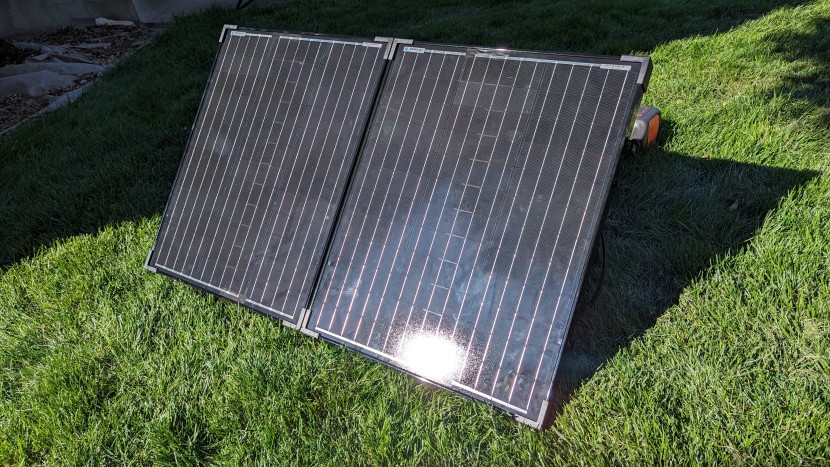
Renogy solar panels are primarily manufactured in China, with additional production in Thailand. Renogy operates manufacturing and assembly facilities across Asia to produce its solar panels and components. The company is headquartered in Ontario, California, and was founded in the United States, but its main production operations are based in Asia.
The History and Background of Renogy Company
From Student Project to Global Brand
Yi Li, the founder of Renogy company, developed her interest in science, particularly physics and mathematics, during her primary school years in China. After obtaining her bachelor’s degree, she decided to pursue a PhD in Physics at Louisiana State University (LSU), where her vision for accessible renewable energy began taking shape.
While in her third year of the doctorate program and still in her mid-twenties, Yi became captivated by decentralized energy systems. She believed that everyone, regardless of location or economic means, should have access to clean, cost-effective, and locally-produced energy. This conviction led her to commit to starting her own company.
With support from LSU’s Business and Technology Center and collaboration from several other students, Renogy was formed. The name itself tells a story. Since “Renergy” was already trademarked, Yi realized she needed to differentiate her approach. Settling upon three key concepts, renewable, innovation, and energy, she created the name RENOGY. Innovation became a signature of the company from the start.
Company Growth and Expansion
Recognizing the opportunities for prosperity in California, Yi made the move from Louisiana to Chino, where the first company warehouse opened in 2010. The headquarters later relocated to Ontario, CA, where operations continue today.
The growth rate proved remarkable. Renogy began experiencing more than 50% growth year-after-year in the off-grid and hybrid markets. By adopting a direct-to-consumer model during the 2012 e-commerce boom, the company enabled direct customer engagement and maintained control over branding and pricing.
The company completed its Series E funding round in June, reaching a USD 1.00 billion valuation and earning unicorn status. This milestone followed four previous funding rounds that attracted investments from prominent firms including Qianhai Fund of Funds, Sirius Capital, and Vision Knight Capital.
Current Business Operations
Renogy currently sells in over eight countries including Japan, Australia, U.K., Germany and the U.S., and has reached over 1 million consumers. The company established operations across five countries with products distributed in over 30 markets.
The workforce comprises 600-700 employees, predominantly millennials, which contributes to the company’s innovative culture and adaptability. The mission remains unchanged: to empower the energy independence of 50 million people with DIY friendly and reliable renewable energy products by the year 2030.
Where Renogy Solar Panels Are Made
Manufacturing Facilities in Thailand
Renogy solar panels are manufactured in Thailand, where the company has established a state-of-the-art production facility. The ISO-certified manufacturing center spans 55,000 square meters (592,000 square feet) and represents over USD 150 million in investment. This substantial financial commitment positions manufacturing as a strategic foundation for quality control, innovation delivery, and scalable growth.
What sets Renogy apart? The company stands as the only player in the off-grid energy industry that combines full in-house R&D with large-scale manufacturing under one modern, vertically integrated facility. This alignment of manufacturing capabilities closely with R&D and product engineering enables Renogy to bring advanced energy technologies to market with consistency, reliability, and speed.
Production Process and Facilities
The Thailand facility houses advanced equipment and intelligent systems designed for precision manufacturing. Robotic assembly operates with micron-level precision, ensuring consistent quality across all production lines. This automation coupled with vertical integration allows Renogy to maintain direct oversight of every production stage.
The manufacturing center handles full-system engineering across multiple product categories: solar panels, batteries, inverters, controllers, chargers, power management systems, and integrated smart energy solutions. As a result, the company controls the entire production chain rather than relying on third-party manufacturers.
Quality Control Standards
Renogy’s manufacturing facility meets rigorous global standards. The production center holds certifications including UL, CE, ISO, and BSCI, with progress toward IATF 16949 automotive-grade certification. These certifications demonstrate the facility’s adherence to international quality benchmarks.
The vertical integration model provides distinct advantages for quality assurance. By controlling production from raw materials to finished products, Renogy can implement stringent testing protocols at each manufacturing phase. This comprehensive approach ensures that products meet performance specifications before reaching customers.
Where Is Renogy Located: Headquarters and Global Presence
California Headquarters
Renogy maintains its headquarters in Ontario, California, at 5050 S Archibald Ave, Ontario, CA 91762. This location serves as the company’s primary base of operations for North American markets. The headquarters coordinates business operations, customer service, and strategic planning for the global organization.
The Ontario facility represents more than just an administrative center. It functions as a hub connecting Renogy’s worldwide manufacturing capabilities with its customer base across North America. Following the company’s founding in 2010, the headquarters has remained anchored in California, supporting the company’s growth into a global renewable energy enterprise.
Distribution Centers and Offices
Renogy operates 15 global sites across 11 nations dedicated to R&D, manufacturing, and customer support. This distributed infrastructure enables the company to serve customers efficiently across different time zones and regions.
The company established a European Office in Germany, specifically at Robert Koch Str. 8, 21423 Winsen, Germany. This office handles European market operations and provides localized support for customers throughout the region. Further expanding its footprint, Renogy recently launched operations in South Africa with strong distribution partnerships, local warehousing, and full partner support.
Countries Renogy Operates In
Renogy serves customers in over 50 countries and maintains operations across 11 nations. The company’s reach extends to major markets including Japan, Australia, United Kingdom, Germany, and the United States. In effect, Renogy has grown into a globally recognized solar and energy storage brand serving over 100 countries with off-grid and distributed energy solutions. South Africa represents the latest addition to the brand’s expanding global footprint, providing full access to Renogy’s technology platform and service infrastructure.
Understanding Renogy’s Manufacturing Quality and Certifications
UL and ETL Certifications
Quality assurance starts with recognized safety certifications. Renogy panels carry UL listings, which validate compliance with safety standards required for solar installations across North America. These certifications matter because they determine eligibility for various incentive programs and ensure products meet rigorous safety protocols.
In fact, Renogy panels also meet CSI (California Solar Initiative) certification standards, making them eligible for state-level tax credits in California and other jurisdictions. Some models carry additional certifications that satisfy requirements in Oregon and other states with specific renewable energy standards.
Vertical Integration Benefits
The vertically integrated manufacturing model delivers tangible advantages beyond cost savings. Streamlined logistics translate to shorter lead times, allowing faster order fulfillment and product delivery. By controlling every step from raw materials to finished modules, Renogy eliminates the communication gaps and handoff problems that typically emerge when multiple vendors must coordinate.
This approach maintains knowledge continuity across all production disciplines. When manufacturing involves separate suppliers, technical information often becomes fragmented or lost during transitions. Vertical integration preserves this knowledge, ensuring consistent quality standards throughout each project phase.
Product Testing and Standards
Product validation extends beyond basic certifications. The manufacturing process incorporates standardized testing protocols that confirm system performance against specifications before deployment. This testing occurs at multiple stages, catching potential issues early rather than after products reach customers.
Warranty Coverage and Support
Renogy provides warranty registration through service.renogy.com/warranty. The process requires your order number for verification. If registration fails, check the order number accuracy first. For purchases made through third-party platforms or dealers, contact customer support directly for assistance.
Warranty documentation comes included in your product package, with comprehensive policy details also available on individual product pages. You can download warranty documents separately for reference and register your warranty online for convenient verification.
Conclusion
Renogy’s Thailand manufacturing facility combined with California headquarters creates a powerful foundation for quality solar products. The company’s vertical integration sets it apart in the off-grid market, allowing complete control from R&D through production.
When you choose Renogy, you’re selecting panels backed by rigorous certifications and a globally recognized brand. With operations across 11 nations and comprehensive warranty support, you can trust that your renewable energy investment comes from a manufacturer committed to quality and accessibility.