Yes, you need an inverter for almost all residential solar panel systems. Solar panels produce Direct Current (DC) electricity, while homes and the utility grid use Alternating Current (AC). A solar inverter converts DC power into usable AC electricity so household appliances and grid connections can operate properly.
What Does a Solar Inverter Do in Your System?
Your solar panel inverter handles three distinct jobs that make your system functional and safe. Understanding these roles helps you appreciate why this component accounts for a significant portion of your installation cost.
Converting DC to AC Power
Inside your inverter, power electronic components called MOSFETs or IGBTs switch on and off thousands of times per second[4]. This rapid switching changes the direction of DC current from your panels, creating an oscillating waveform that mimics AC electricity. The process includes taking DC input from your panels, using these high-speed switches to pulse the current in alternating directions, then filtering out high-frequency harmonics to produce clean AC power.
Modern inverters achieve conversion efficiencies between 95-98%[4]. This means if your panels generate 5,000W of DC power and your inverter operates at 97% efficiency, you’ll get 4,850W of usable AC output. The inverter also regulates voltage and frequency through control circuits, ensuring the electricity matches grid standards before sending it to your electrical panel.
Monitoring System Performance
Your inverter tracks real-time data on energy production, efficiency, and system health. This monitoring happens continuously, allowing you to spot potential issues before they become major problems. Most modern units connect to smartphone apps or web portals, giving you remote access to check your system’s status from anywhere.
Beyond current performance, inverters provide comprehensive analysis of energy production across different timeframes, from daily snapshots to yearly trends. You’ll receive active alerts about low power output, system faults, or maintenance needs. This data becomes particularly valuable when managing battery storage or navigating time-of-use electricity rates.
Protecting Your Solar Investment
Solar inverters include multiple safety mechanisms that protect both your equipment and utility workers. Anti-islanding protection prevents your system from feeding electricity back to the grid during power outages, which could endanger maintenance crews. When the grid loses power, your inverter detects the abnormal voltage or frequency and shuts down automatically.
Ground fault detection monitors for current flowing unintentionally to the ground, which could cause fires or equipment damage. Arc fault circuit interrupters monitor leakage current in real time, disconnecting from the grid within 0.3 seconds when residual current exceeds safe limits. Additional protections include reverse polarity safeguards that prevent operation if wiring connections are incorrect, plus overcurrent and overvoltage protection through built-in circuit breakers and surge protectors.
When Do You Actually Need an Inverter for Solar Panels?
The answer to whether you need an inverter for solar panels depends entirely on your system design and what you plan to power.
Grid-Tied Solar Systems Always Require an Inverter
Grid-tied systems connect directly to your local utility grid, and this configuration makes inverters non-negotiable. Your home runs on AC power, and the electrical grid operates on the same standard. Solar panels generate DC electricity, creating an incompatibility that only an inverter can resolve.
These systems synchronize with the grid, converting your panel’s DC output to match the grid’s voltage and frequency exactly. During sunny periods, your inverter converts DC to AC for immediate household use, then feeds any surplus back to the grid for bill credits. When production drops at night or during cloudy weather, the system automatically draws from the grid to fill the gap.
Grid-tied inverters include a safety feature that shuts your system down during power outages to protect utility workers repairing downed lines. Without this automatic disconnection, your panels could energize supposedly dead wires, creating a serious hazard.
Off-Grid Systems with AC Appliances
Off-grid setups disconnect entirely from utility power, relying solely on your panels and battery storage. If you plan to run standard household appliances, lights, or electronics that use AC electricity, you need an off-grid inverter.
These inverters convert DC power stored in your batteries into AC electricity for everyday devices. Pure sine wave inverters work with sophisticated electronics like HD televisions and gaming consoles, while modified sine wave units suit simpler applications but can cause motors to run hot and electronics to fail prematurely.
When You Can Skip the Inverter (DC-Only Setups)
You can bypass the inverter entirely if you only use DC-powered equipment. This approach works for specific applications like campers, boats, or remote cabins where you run DC appliances such as LED lights, DC refrigerators, fans, and USB-charged devices.
DC-only systems save you between £200 to £1,000 on equipment costs and eliminate conversion losses. However, you’ll need a solar charge controller to stabilize voltage, protect batteries, and prevent reverse current flow at night.
Types of Solar Panel Inverters and How to Choose
Choosing the right solar inverter depends on your roof layout, shading conditions, and budget constraints. Four main types serve different installation scenarios.
String Inverters for Simple Installations
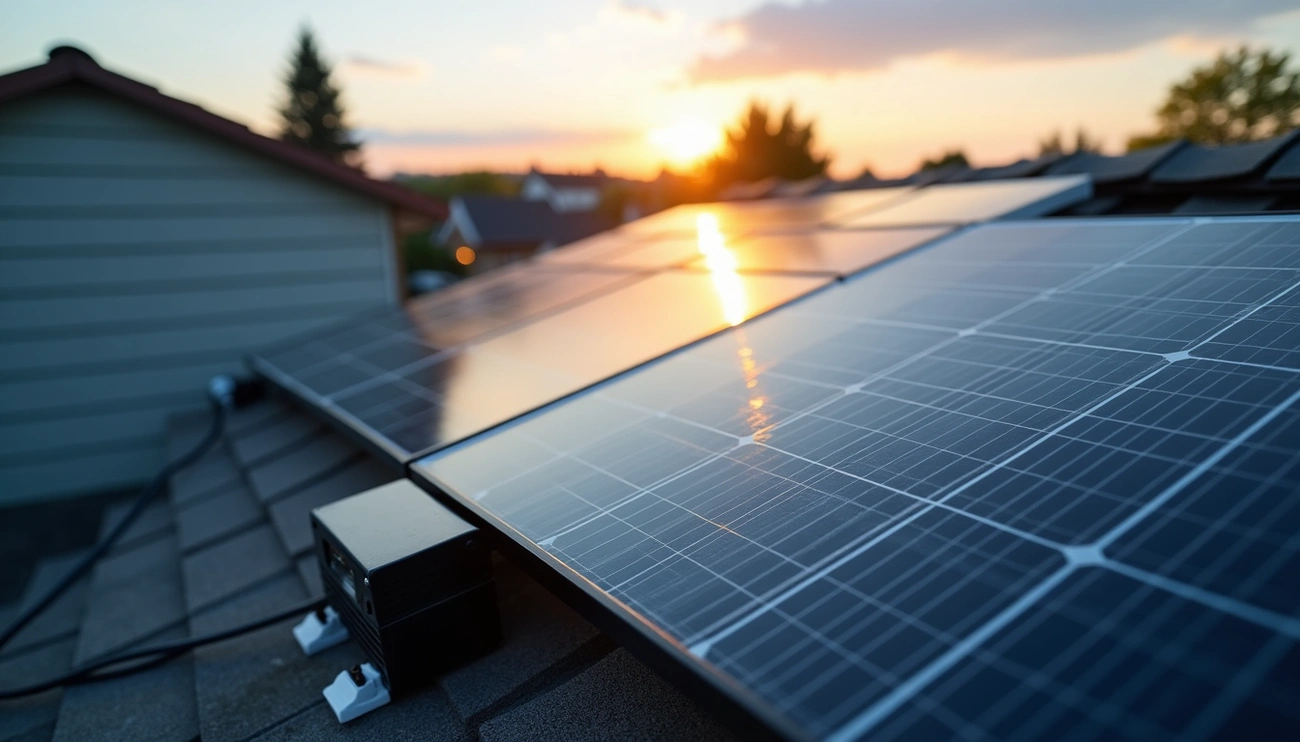
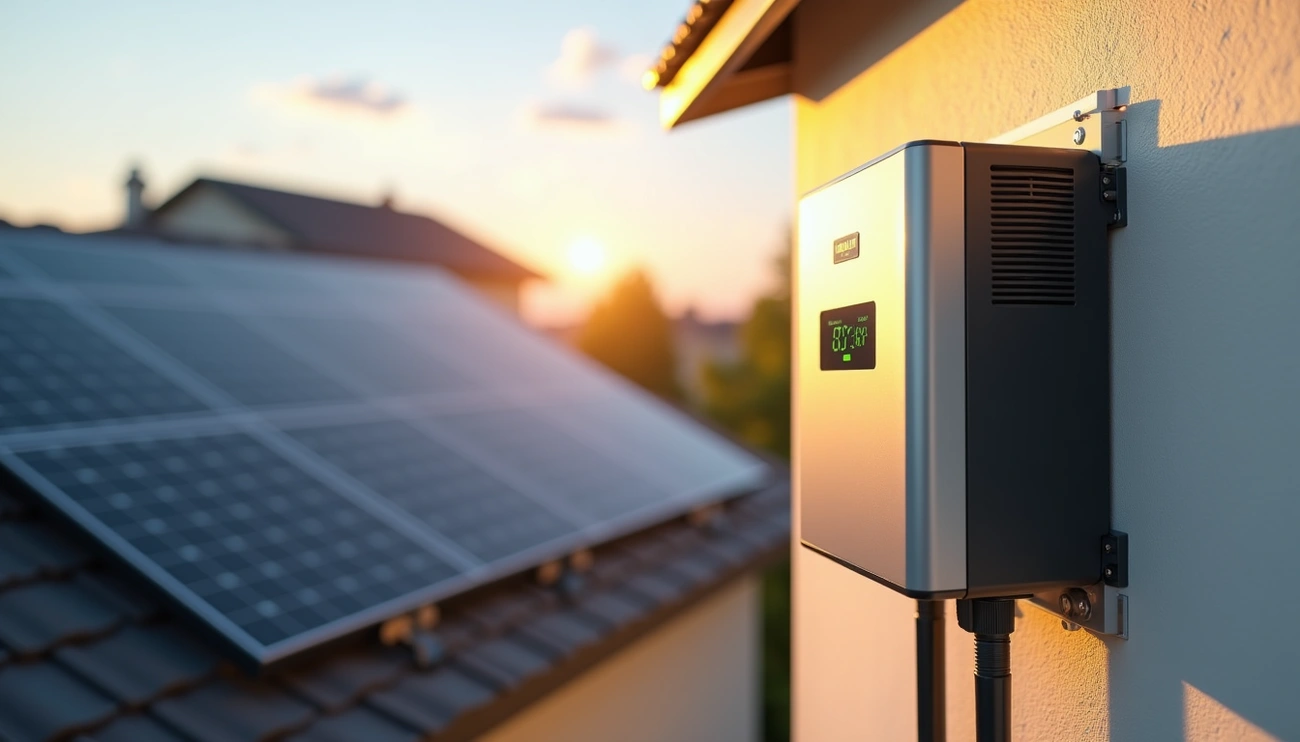
String inverters connect multiple panels together in series, then convert the combined DC output to AC at one central location. This single inverter typically mounts on your home’s exterior wall or inside your garage.
The main drawback: your entire string performs at the level of your weakest panel. If one panel drops to 250W due to shading, every panel in that string produces only 250W, even if they’re rated for 330W. String inverters work best for roofs with full sun exposure and panels facing the same direction. They cost less upfront but typically carry 10-15 year warranties compared to 25 years for microinverters.
Microinverters for Maximum Panel Independence
Microinverters attach to each individual panel’s backside, converting DC to AC right at the source. Each panel operates independently, so shading on one unit doesn’t affect the others. This independence makes microinverters ideal for complex roofs with multiple orientations or partial shade.
You’ll pay $0.50-$0.80 per watt more than string inverters. For a 7kW system, that’s $2,500-$4,000 additional. However, microinverters can increase energy output by 5-25% in shaded conditions and come with 25-year warranties.
Hybrid Inverters for Battery-Integrated Systems
Hybrid inverters combine a solar inverter with battery management capabilities. They perform bidirectional DC-AC conversion, charging batteries with excess solar production and discharging stored energy when needed. These units manage power flow between your panels, battery bank, and utility grid automatically.
During outages, hybrid inverters switch to battery backup within milliseconds. They’re battery-ready from installation, making future storage additions easier.
Power Optimizers as a Middle Ground
Power optimizers attach to each panel but don’t convert electricity themselves. Instead, they condition the DC power through maximum power point tracking, then send optimized voltage to a central string inverter for AC conversion. This setup costs $0.30-$0.50 per watt more than standard string systems, positioning them between string inverters and microinverters on price.
What Happens If You Don’t Use an Inverter?
Running solar panels without an inverter creates three significant problems that affect functionality and safety.
Your Appliances Won’t Function
Without an inverter, your solar panels can’t supply usable power since your home runs on alternating current, not direct current. Solar panels generate DC electricity, but standard household devices require AC power. In effect, you’ll have no lights, no refrigerator operation, no phone charging. The raw DC output simply sits there, incompatible with everything plugged into your outlets.
Potential Equipment Damage
Connecting AC appliances directly to DC power from panels risks serious equipment damage. Transformers inside appliances might overheat when fed DC current instead of AC. Solar panels produce variable, unconditioned voltage that fluctuates with sunlight intensity. If panel voltage exceeds your device’s rating, you’ll damage internal components. Even DC-powered devices face risks due to the unstable output, as most require fixed voltage that solar panels don’t provide.
Limited to Basic DC Devices Only
You can only operate specialized DC equipment without an inverter. LED lights, DC refrigerators, fans, and USB-charged devices designed for 12V or 24V systems work in this setup. Boat-specific appliances and RV equipment run on DC power. However, unless devices are specifically manufactured for RV or marine service, very few appliances prove compatible with DC power.
Conclusion
As long as you’re running standard household appliances, your solar system needs an inverter to function properly. String inverters work great for straightforward installations with minimal shading, while microinverters offer better performance on complex roofs. Hybrid units make sense if you’re planning battery storage down the line.
Choose the inverter type that matches your roof layout, budget, and energy goals. This decision directly impacts your system’s efficiency and long-term performance.