Solar pool cover bubbles face down toward the water, while the smooth side faces up. The bubbles must touch the water to trap solar heat, reduce evaporation, and improve heat transfer. This position increases heating efficiency and helps the cover stay in place on the pool surface.
Pool Solar Cover Bubbles Up or Down: The Definitive Answer
The placement rule for solar pool covers is non-negotiable: bubbles always face down toward the water. If you’re searching for solar cover bubbles up or down or pool solar cover which side up, this is your answer. The bubble side must contact the pool surface, while the smooth side faces the sky.
Bubbles Always Go Down
Every solar cover installation follows the same principle. Place your solar blanket bubbles up or down question to rest by positioning the bubbled surface against the water. This applies whether you have a standard blue cover or a silver/blue dual-sided version. The bubble orientation remains constant regardless of cover type or pool shape.
How the Bubble Side Works
The bubbles function as tiny heat transfer chambers. Sun warms the air trapped inside each bubble, and this heat moves directly into your pool water when bubbles contact the surface. Specifically, quality solar covers contain approximately 11,500 bubbles per square meter, which is roughly 40% more than standard covers. This density creates thousands of individual heat pockets working simultaneously.
The bubbled structure acts as an insulator by trapping solar energy in these air pockets. Think of each bubble as a miniature greenhouse, absorbing and directing the sun’s rays downward into the pool. Besides heat transfer, this design helps the cover float securely on the water’s surface while maintaining chemical balance.
During colder months, the bubble layer retains warmth that accumulated throughout the day. This continuous heat retention process only works when bubbles face the water directly.
What Happens If You Put Bubbles Up
Installing your pool cover bubbles up or down incorrectly creates multiple problems. When bubbles face upward, trapped heat has nowhere to go. Consequently, you end up with a warmer cover but not a warmer pool.
The damage extends beyond lost efficiency. Air inside upward-facing bubbles overheats and expands beyond design tolerances. This expansion causes bubbles to burst, leading to cracking, peeling, and premature breakdown of the plastic material. Your cover’s lifespan decreases significantly when installed incorrectly.
Why Bubble Orientation Matters for Your Pool
Proper bubble orientation directly impacts your pool’s performance and your wallet. Getting the solar cover which side up question right delivers measurable benefits across multiple areas.
Heat Transfer and Temperature Control
Correctly positioned bubbles can raise your pool’s water temperature by 10 to 15 degrees Fahrenheit. The air pockets transfer solar energy directly to the water surface when facing downward. Pools that receive at least 6 hours of direct sunlight experience the most dramatic temperature gains. I’ve seen pools maintain comfortable swimming temperatures even during cooler spring and autumn months because of this passive heating effect.
Reducing Water Evaporation
Evaporation accounts for 70% of total energy loss in pools. A properly installed solar cover prevents 95% to 98% of water evaporation. For perspective, each pound of 80°F water that evaporates removes 1,048 BTUs of heat from your pool. Consequently, stopping evaporation means retaining thousands of BTUs daily. Pool owners report water level drops of only 0.5 inches per week with covers installed, compared to 1.5 to 3 inches without them.
Protecting Your Cover from Damage
Upward-facing bubbles overheat and expand beyond their design limits. This causes bubbles to burst, creating cracks and peeling throughout the material. Your cover’s lifespan shortens significantly when installed incorrectly, forcing you to replace it sooner than necessary.
Chemical and Energy Savings
Solar covers reduce chemical consumption by 35% to 60%. Less evaporation means you add less fresh water, which requires fewer chemicals to maintain proper balance. Additionally, heating cost reductions range from 50% to 70%. These savings add up quickly. Many pool owners recover their cover investment within a single swimming season through reduced energy bills and chemical purchases.
How to Install Your Solar Pool Cover the Right Way
Installing your solar cover takes minimal effort when you follow the right sequence. The process ensures proper fit and maximum heat retention.
Unpack and Position the Cover
Open the packaging carefully without using sharp blades that might damage the material. New covers arrive tightly compressed, and you’ll need another person to help unfold them. Spread the cover across your pool surface with the bubble side facing down toward the water.
For rectangular, round, or oval pools with exact-size covers, positioning becomes straightforward. Center the cover properly before making any cuts. Use seam lines in the material as reference points to ensure even placement. Place light weights around the edges to prevent wind from shifting the cover during setup. Water tubes work well since they won’t puncture or damage the material.
Let the Cover Settle on the Water
Allow the cover to sit in the sun for a few hours before trimming. The heat softens the plastic and helps eliminate packing wrinkles[141]. For freeform pools or curved shapes, this relaxation period can take 24 hours or longer in colder weather. The material needs time to conform naturally to your pool’s contours.
Trim to Fit Your Pool Shape
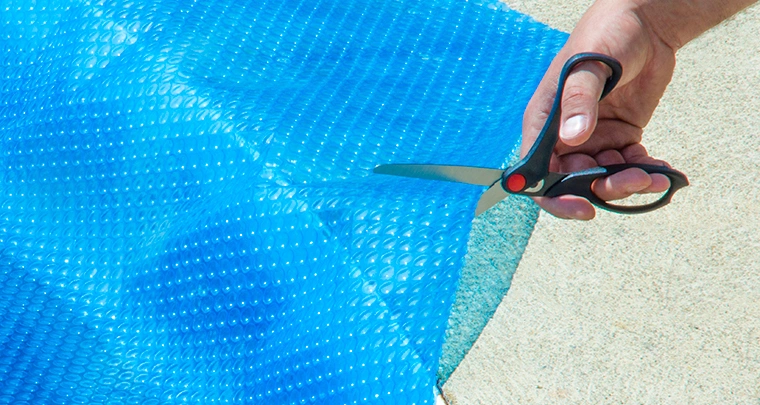
If you’re using a reel system, attach the straps and clips to the cover before cutting. This connection shortens the cover by 2 to 3 inches. Use the inside edge of your coping stone as a cutting guide. A sharp razor knife dragged along the coping edge produces faster, cleaner cuts than scissors.
Cut conservatively at first. You can always trim more material, but you can’t add it back once removed.
Smooth Out Air Pockets and Wrinkles
Use your pool brush to push the cover edges against the pool wall and eliminate trapped air beneath the surface[151]. The cover should float naturally on the water without being drum-tight.
Common Mistakes to Avoid with Solar Covers
Several avoidable errors shorten your solar cover’s lifespan and reduce its efficiency. Recognizing these mistakes helps you protect your investment.
Installing with Bubbles Facing Up
Flipping your pool cover bubbles up or down incorrectly wastes the cover’s heating potential entirely. Heat stays trapped in upward-facing bubbles with nowhere to transfer, resulting in an overheated cover but cool pool water.
Leaving the Cover in Direct Sun When Off the Pool
Direct sunlight damages covers when they’re removed from the pool. The sun prismed through the bubbles can damage the layers beneath. Accordingly, store your cover in shade or use a protective white tarp when it’s rolled up. Store the cover indoors or in a protected location when temperatures exceed 115°F, as extreme heat causes the cover’s layers to fuse together.
Not Using a Cover Reel or Roller
Dragging your solar cover across pool edges creates tears and punctures. A reel system protects the material during removal and storage while making the process significantly easier. Reels also keep covers off the ground where they’d face additional sun exposure and contamination.
Covering a Dirty Pool
Shocking your pool with the cover on ranks as the number one cause of solar cover deterioration. High chlorine levels break down the material, filling your skimmer with small plastic pieces. Remove the cover before adding chemicals, then wait several hours for proper dispersion before replacing it. Rinse chemicals off the cover with cold water before extended storage periods.
Conclusion
Getting your solar cover orientation right is simple once you know the rule: bubbles always face down. This single decision affects everything from heat retention to chemical savings and your cover’s lifespan. Take the time to install it correctly, avoid the common mistakes I’ve outlined, and your pool will stay warmer while your operating costs drop significantly. By all means, protect your investment and you’ll enjoy comfortable swimming temperatures for years to come.