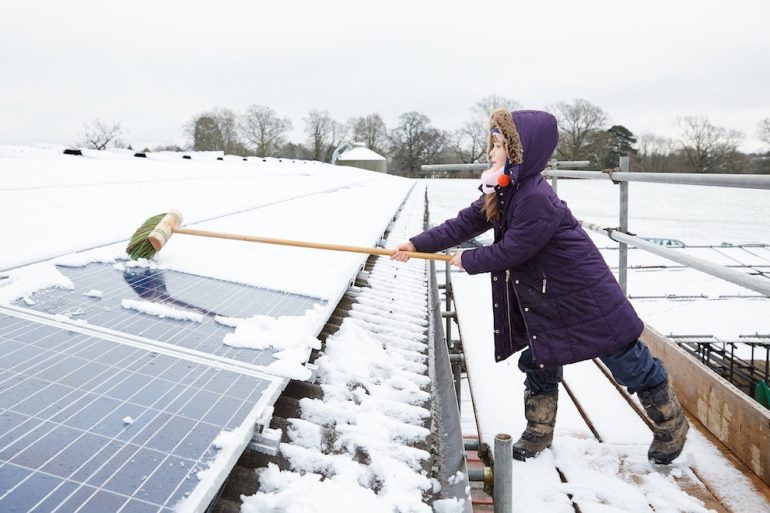
Solar panels work when covered with snow, but output decreases. Thin snow layers allow light to reach photovoltaic cells. Dark panels and a 30–45° tilt often melt or shed snow quickly. Heavy snow blocks sunlight and stops production. Cold, sunny, snowy conditions can increase output through the albedo effect, which reflects extra sunlight onto panels.
Do Solar Panels Work When Covered With Snow?
What Happens When Snow Covers Your Panels
When snow completely blankets your solar panels, they cannot generate electricity. The panels rely on sunlight reaching the photovoltaic cells, and a thick layer of snow blocks this process entirely. However, the situation changes dramatically with lighter accumulation. A dusting of snow has minimal impact because wind can blow it off easily, and light is able to forward scatter through a sparse coating, reaching the panel to produce electricity.
Interestingly, light can penetrate through 5 to 8-centimeter layers (2 to 3 inches) of snow, enabling panels to continue generating electricity even when covered. This means your panels aren’t necessarily useless during light snowfall. The combination of light penetration and the panel’s ability to absorb heat quickly clears thin snow accumulations.
Snow coverage can reduce output by 10-40% depending on depth, duration, and temperature. Once cleared, systems return to full efficiency. The output may reduce by 10-20% during the snowy season, with heavy snowfall bringing more losses while areas with clear skies in winter experience minimal impact.
How Long Snow Typically Stays on Solar Panels
Light snow hardly takes a few hours to melt or run off the panels. The dark surface of solar panels absorbs sunlight and generates heat while converting sunlight to electricity, which melts the snow easily. This self-cleaning aspect starts from the point where sunlight first hits and gradually spreads throughout the entire panel.
Heavy snow presents a different timeline. It may cover your panel’s surface for 1 to 3 days, depending on sun exposure and the tilt angle. Once the snow starts to slide, even if it only slightly exposes the panel, power generation is able to occur again.
Partial Snow Coverage vs. Complete Coverage
The difference between partial and complete coverage matters significantly. If panels are partially covered, they can still produce electricity. Even with light snow cover over the entire array, there’s a good chance they will work.
In other words, you don’t need perfectly clear panels to generate some power. The more your panel is exposed, the more electricity it will produce. It’s rare that an entire array is 100% covered with ice or snow all at once, so even in heavy storms, partial exposure of a panel to the sun allows that panel to create some electricity.
How Solar Panels Perform in Winter Weather
Cold Temperature Actually Improves Efficiency
Solar panels generate electricity from sunlight, not heat. This distinction matters because photovoltaic cells actually perform better in cooler conditions. Panels are tested at 77°F (25°C), and their efficiency drops by about 0.4 to 0.5 percentage points for each degree Celsius above that temperature. Thus, a panel baking on a summer roof may give up several percent of its output simply because it runs hot, while the same module on a crisp winter day retains more of the sunlight it captures.
Cold temperatures reduce the internal resistance of electrical components, resulting in higher voltage output. For instance, efficiency can increase by up to 0.5% for every degree below 25°C (77°F). When panel temperatures drop to 10°C (50°F), efficiency gains can reach 5% to 7% compared to baseline performance. In contrast, panels running at 65°C (149°F) on extreme summer days lose 12% to 18% efficiency.
Shorter Days vs. Better Performance
Winter production drops significantly due to reduced daylight hours. Solar output can fall by 30% to 50% depending on location and weather severity. Daylight hours shrink to just 9 to 10 hours per day during winter months, compared to longer summer days.
However, the efficiency boost from cold temperatures helps offset some of these losses. The sun sits lower in the sky and sunlight hits panels at less direct angles, but cold air keeps panels at optimal operating temperatures for electricity production.
The Albedo Effect: Snow as a Reflector
Fresh snow reflects up to 80 percent of incoming sunlight. When sunlight hits a white field or nearby roof, some bounces onto exposed parts of your panels. This albedo effect can improve output by 1% to 5% when panels are clear but surrounded by snow. Some studies show reflected light can raise solar output by 5% to 15% under optimal conditions.
Why Snow Isn’t a Major Concern for Solar Production
Solar Panels Are Installed at an Angle
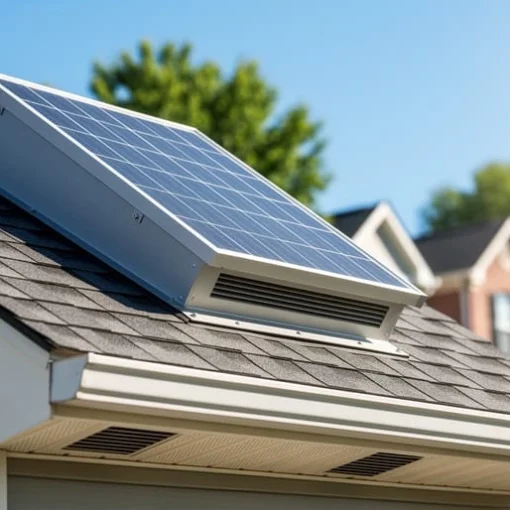
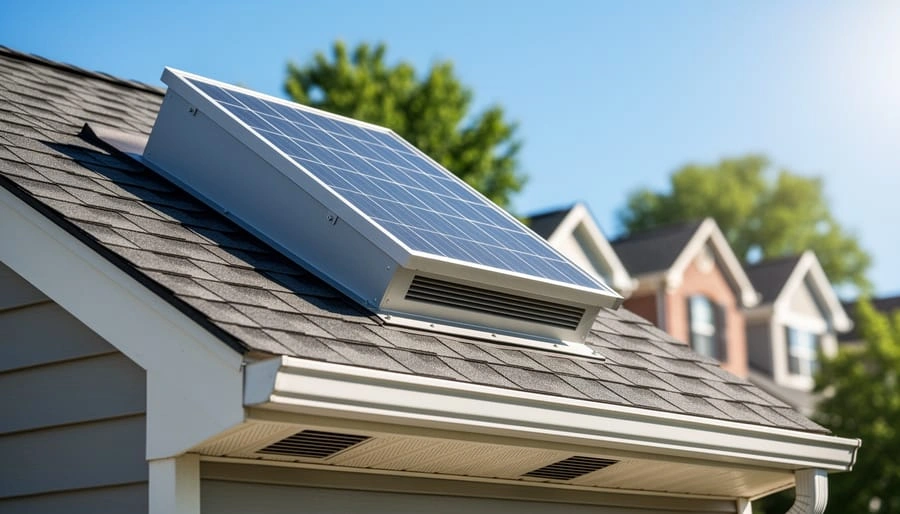
Panels are typically installed at angles between 30 and 60 degrees. This tilt serves a dual purpose: optimizing sun exposure and enabling natural snow removal. A minimum tilt of 30 degrees is required for snow to slide off, preventing long-term light blockage and production loss. The smooth glass surface provides minimal friction, allowing even light winds to help clear accumulated snow.
Gravity works in your favor once the panel surface warms slightly. Panels installed at a tilt angle of 35 degrees or higher clear snow more quickly than flatter installations. Accordingly, most residential panels shed snow naturally within 24 to 48 hours of a storm ending.
Dark Panels Absorb Heat and Melt Snow
The dark silicon cells absorb electromagnetic radiation efficiently, warming the panel surface even when ambient temperature hovers around 20°F. This creates a thin water layer at the contact point between snow and glass. That microscopic melt layer acts as a lubricant, dramatically reducing friction.
You don’t need panels hot enough to melt all the snow. Just warm enough to loosen it. Once friction drops, modest tilt angles become sufficient for gravity to win. As a result, snow melts off panels much quicker than it does from your roof or the ground.
Snow Acts as a Natural Panel Cleaner
When snow melts or slides off panels, it carries away leaves, debris, pollen, and dust. Any dirt on the glass bonds with the snow, washing it away when the sun melts it off. This automatic rinsing effect eliminates the need for manual cleaning during snowy season.
Annual Production Remains Largely Unaffected
In reality, properly designed systems in snow-prone regions lose only 1 to 3% of annual production to snow coverage. A five-year study found snowfall results in about 3% energy loss. Snow-related losses typically account for less than 10% of annual electricity generation, and your system was sized for annual production, not daily perfection.
Conclusion
In conclusion, while solar panels cannot generate meaningful electricity when fully and heavily covered with snow—since thick accumulation effectively blocks sunlight from reaching the photovoltaic cells—the impact on overall performance is far less severe than commonly assumed.
Light snow often scatters some light or slides off quickly due to panel tilt, wind, or natural melting from the panels’ dark surface absorbing heat, and even partial exposure allows production to resume rapidly.
Studies, including long-term research from institutions like the Northern Alberta Institute of Technology, show that annual energy losses from snow coverage typically amount to only about 3%, much lower than earlier estimates.
Moreover, colder winter temperatures actually enhance panel efficiency, and ground-reflected sunlight (albedo effect) from snow can sometimes boost output. With proper installation angles and occasional safe clearing methods if needed, solar remains a reliable and effective energy source year-round, even in snowy climates.