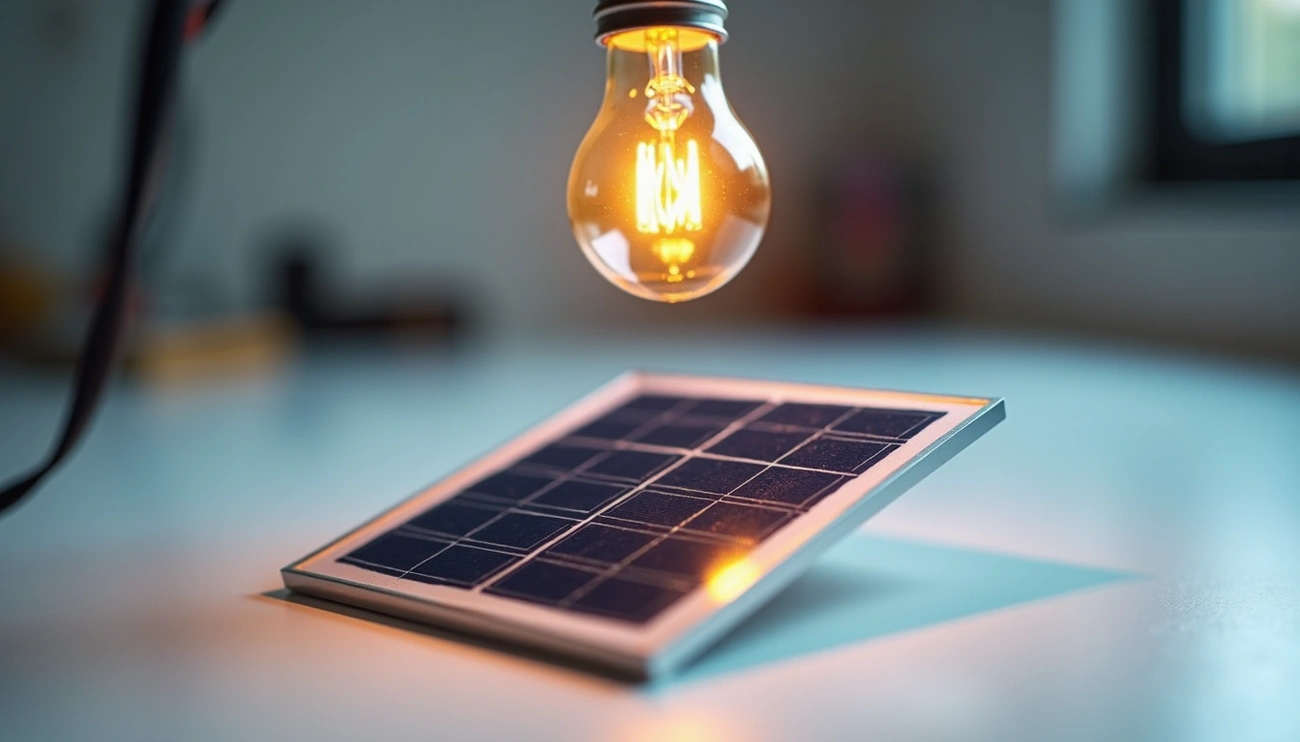
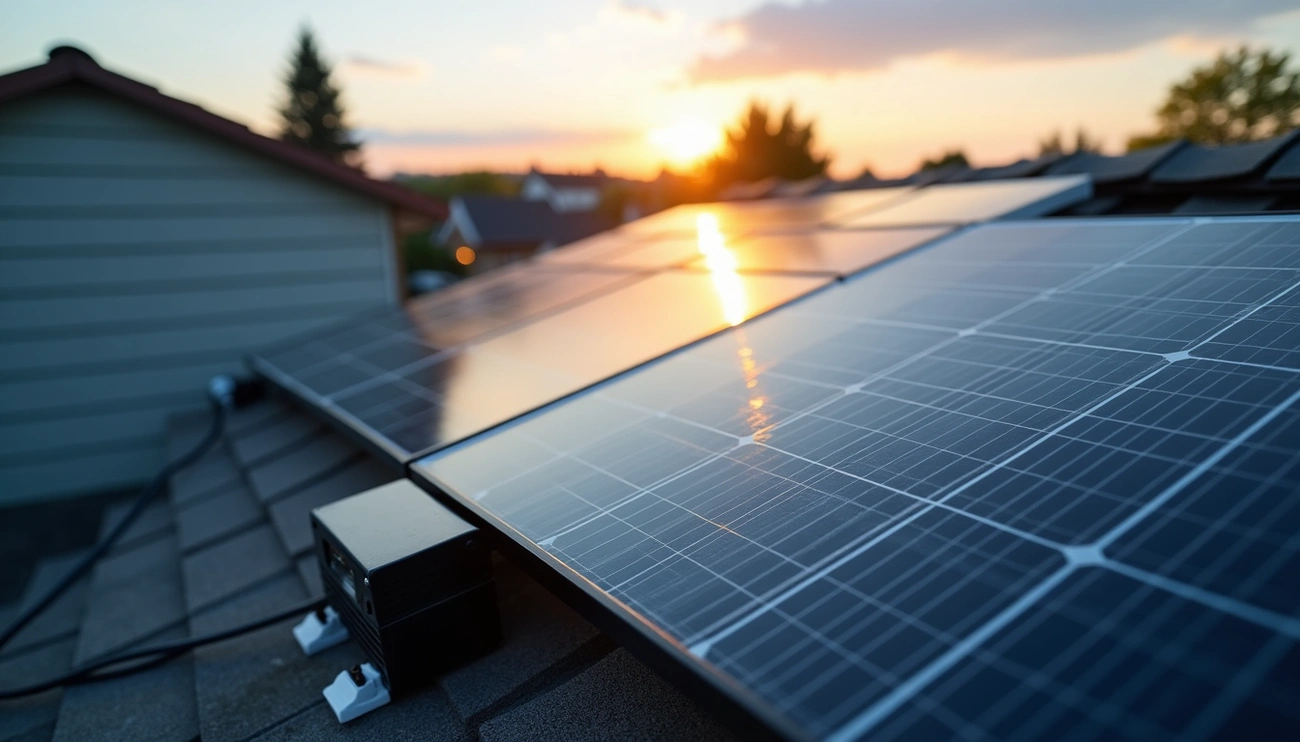
Solar panels produce Direct Current (DC) electricity, where electrons flow in a single direction. Homes and the utility grid operate on Alternating Current (AC). A solar inverter converts the DC electricity generated by solar panels into usable AC power for household appliances and grid-connected systems.
Do Solar Panels Generate AC or DC Current?
Solar panels produce DC electricity
Solar panels inherently generate direct current electricity. This happens because photons from sunlight strike the photovoltaic cells within each panel, knocking electrons loose from semiconductor atoms. These freed electrons flow in a single direction from the negative to the positive side of the cell. This consistent, unidirectional movement defines direct current.
The flow never reverses or alternates. Electrons move steadily in one direction as long as sunlight hits the panels. This natural physical phenomenon cannot be altered.
The photovoltaic effect explained
The photovoltaic effect was first discovered in 1839 by Edmond Becquerel. Solar cells within panels are composed of two different types of semiconductors (p-type and n-type) joined together to create a p-n junction. By joining these semiconductors, an electric field forms in the junction region as electrons move to the positive p-side and holes move to the negative n-side.
When photons from sunlight penetrate the solar cells, they transfer energy to electrons in the semiconductor material. This absorbed energy excites electrons and knocks them loose from their atomic bonds. Once freed, these electrons can move through the material.
The p-n junction’s electric field directs electron movement in a controlled direction. Instead of being attracted to the p-side as expected, the freed electron moves to the n-side. This motion creates an electric current in the cell. The hole left behind moves in the opposite direction to the p-side.
Metal plates on the sides of each solar cell collect electrons and transfer them to wires. At this point, electrons flow as electricity through the wiring.
Why solar panels can’t produce AC directly
Solar panels cannot produce AC electricity because the photovoltaic effect doesn’t create the alternating flow of electrons necessary for AC. AC requires electric current to switch directions continuously. Creating that alternating flow requires active electronic switching, something solar cells are not designed to do.
The physical process occurring in solar cells simply doesn’t lend itself to producing alternating current. Manufacturers optimize the materials and structures involved in the photovoltaic effect for direct current production.
Understanding the Difference Between AC and DC Power
What is direct current (DC)?
Direct current flows in a single, constant direction. The electrons move from the negative terminal to the positive terminal in an unbroken path. This unidirectional flow maintains constant polarity, meaning the voltage remains stable over time.
Batteries, solar cells, and fuel cells all produce DC power. The defining characteristic is that DC has zero frequency since the current never changes direction. This predictable nature makes DC ideal for sensitive electronics that require steady voltage.
What is alternating current (AC)?
Alternating current periodically reverses direction. The electrons flow in both positive and negative directions, creating a sinusoidal wave pattern. In the U.S., AC operates at 60 Hz, meaning the current changes direction 120 times per second. Other countries use 50 Hz as their standard frequency.
AC is generated by alternators at power plants, where rotating magnets create waves of alternating current. As the wire loop spins inside a magnetic field and moves between north and south poles, the current naturally alternates direction.
Why your home uses AC power
Your home runs on AC because of its transmission efficiency. Transformers can easily step AC voltage up or down, which minimizes power loss during long-distance transmission[92]. Power plants send electricity at extremely high voltages (over 110kV in some cases) through transmission lines, then transformers step it down to safe levels for household use[62].
This ability to change voltage levels made AC the winner in the late 1800s “War of the Currents” between Thomas Edison (who favored DC) and Nikola Tesla (who championed AC). Tesla demonstrated that AC could power Buffalo, New York from Niagara Falls on November 16, 1896.
AC vs DC comparison
The power losses in transmission wires equal the square of the current multiplied by resistance. Consequently, doubling the voltage cuts current in half and reduces power losses by 75%. AC accomplishes this voltage transformation effortlessly through transformers, whereas DC cannot[84].
AC travels efficiently across vast distances, while DC traditionally struggled beyond one mile from power plants. DC also costs more due to higher insulation requirements.
How Solar Power Gets Converted from DC to AC
The role of inverters in solar systems
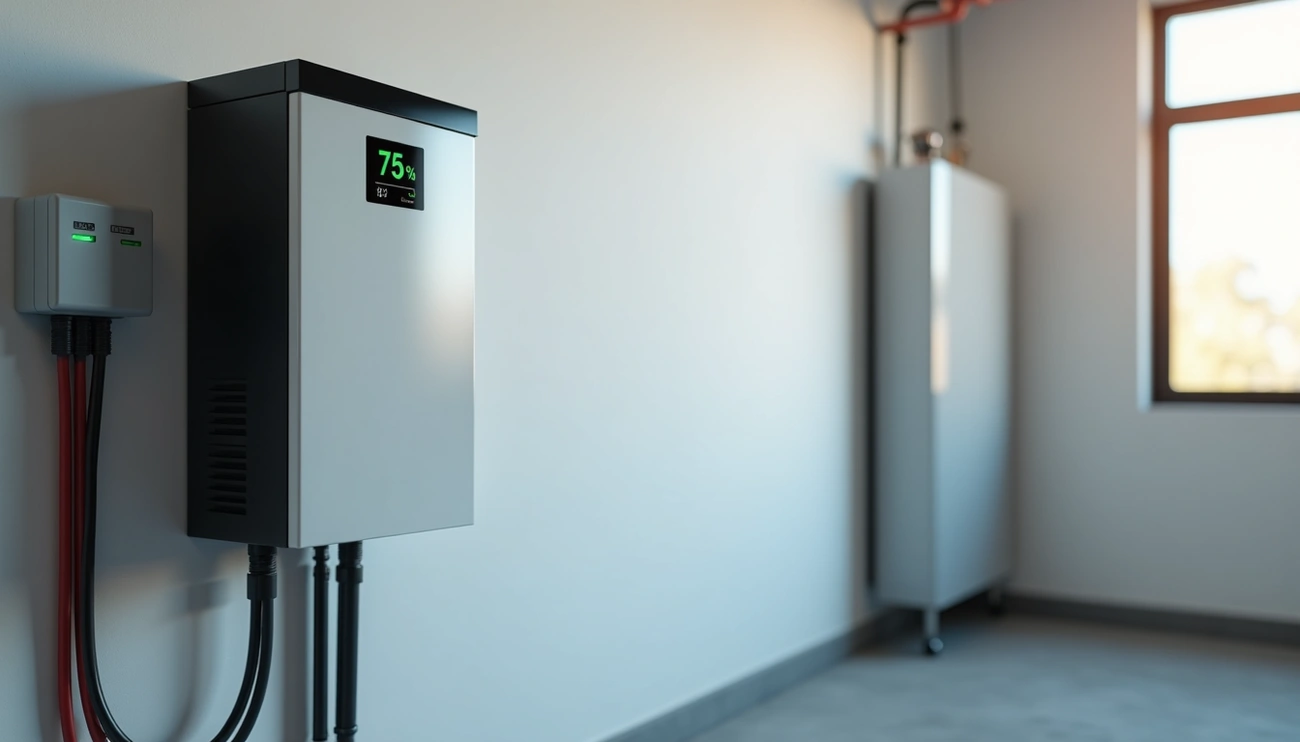
An inverter bridges the gap between what solar panels produce and what your home needs. This device converts DC electricity from panels into AC electricity for household use. Inside the inverter, high-speed electronic switches (typically MOSFETs or IGBTs) turn on and off thousands of times per second. As a result, the inverter switches the direction of DC input back and forth rapidly, transforming it into AC output.
Filters eliminate high-frequency harmonics, and control circuits adjust voltage and frequency to match grid requirements. Modern inverters operate at 95-98% conversion efficiency, meaning minimal energy loss during this transformation. In addition, inverters monitor system performance, provide communication portals, and ensure grid synchronization.
String inverters vs microinverters
String inverters connect multiple panels in series to one central inverter that converts power from the entire string. This setup proves cost-effective but creates a vulnerability: shading or damage to one panel reduces the entire string’s output.
By comparison, microinverters attach to each individual panel and convert DC to AC right at the source[121]. Shading on one panel doesn’t affect others since each operates independently. Microinverters cost more upfront but offer 25-year warranties versus 10-15 years for string inverters.
AC solar panels explained
AC solar panels are modules with microinverters built into the back at the factory. This integrated design eliminates separate inverter installation and simplifies rooftop work. Each panel becomes a self-contained power unit that outputs grid-ready AC electricity immediately.
Power optimizers and hybrid systems
Power optimizers are not inverters themselves but condition DC power before sending it to a central string inverter. These devices use maximum power point tracking (MPPT) to maximize each panel’s output. Meanwhile, hybrid inverters combine solar conversion with battery management capabilities, storing excess energy and managing power flow between panels, batteries, and the grid.
DC Solar Panels vs AC Solar Panels: Which is Better?
Traditional DC solar panels
DC panels generate electricity that flows directly to batteries or a central inverter. This configuration works best for off-grid setups where battery storage plays a central role. The streamlined path means fewer conversion steps, resulting in efficiency losses of just 2-5%. DC systems connect seamlessly with solar-powered devices that run on direct current, eliminating unnecessary conversions.
AC solar panels with built-in microinverters
AC solar panels feature factory-integrated microinverters on the back of each module. These microinverters convert DC to AC at the panel level, creating independent power units. Each panel operates separately, so shading on one unit doesn’t drag down the others. Microinverters include 25-year warranties, substantially longer than standard string inverter coverage.
Cost comparison
AC solar panels typically cost 10-20% more upfront than DC systems. However, microinverter systems can deliver up to 25% more power than conventional inverter systems, offsetting the initial premium through increased production.
Performance in different conditions
AC systems produce 5-25% more energy than equivalent DC systems, depending on site conditions. Shaded installations see the greatest advantages. DC-coupled systems prove more efficient overall, with conversion losses of 2-5% compared to 10-15% for AC systems with battery storage.
When to choose DC systems
Choose DC for off-grid installations, battery-heavy configurations, or when powering DC appliances directly. DC coupling excels where efficiency matters most and grid connection isn’t required.
When to choose AC systems
Select AC systems for grid-tied residential setups, retrofit battery additions to existing solar, or installations with complex roof layouts and partial shading.
Conclusion
Solar panels produce DC electricity by nature, but your home requires AC power to function. This gap is bridged by inverters, which convert DC to usable AC current. When choosing between traditional DC systems with string inverters and AC panels with built-in microinverters, consider your specific situation. For that reason, evaluate factors like shading, budget, and whether you need battery storage. The right choice depends entirely on your energy goals and installation conditions.