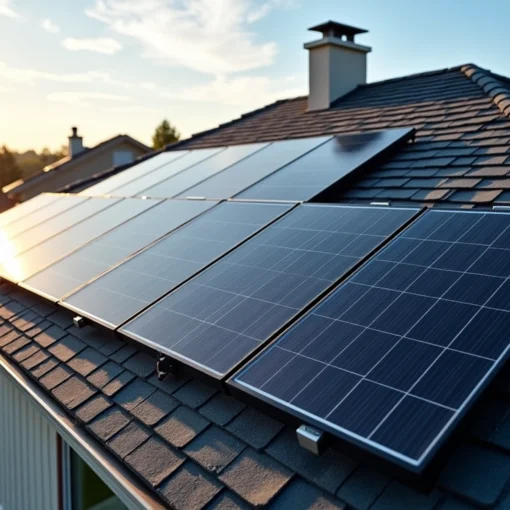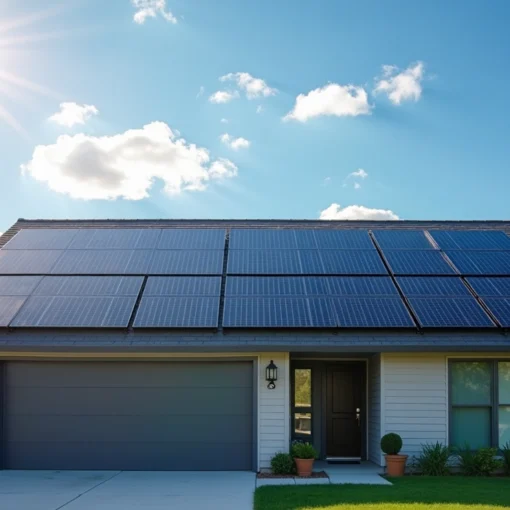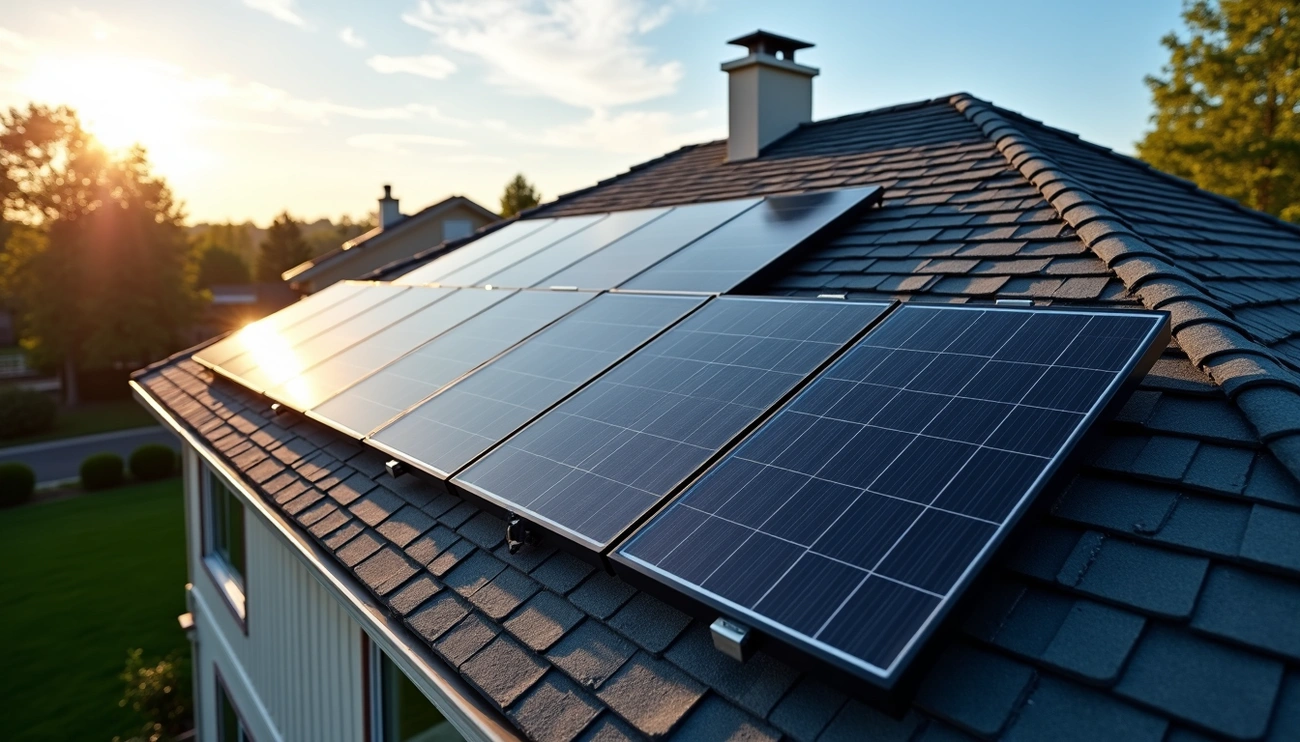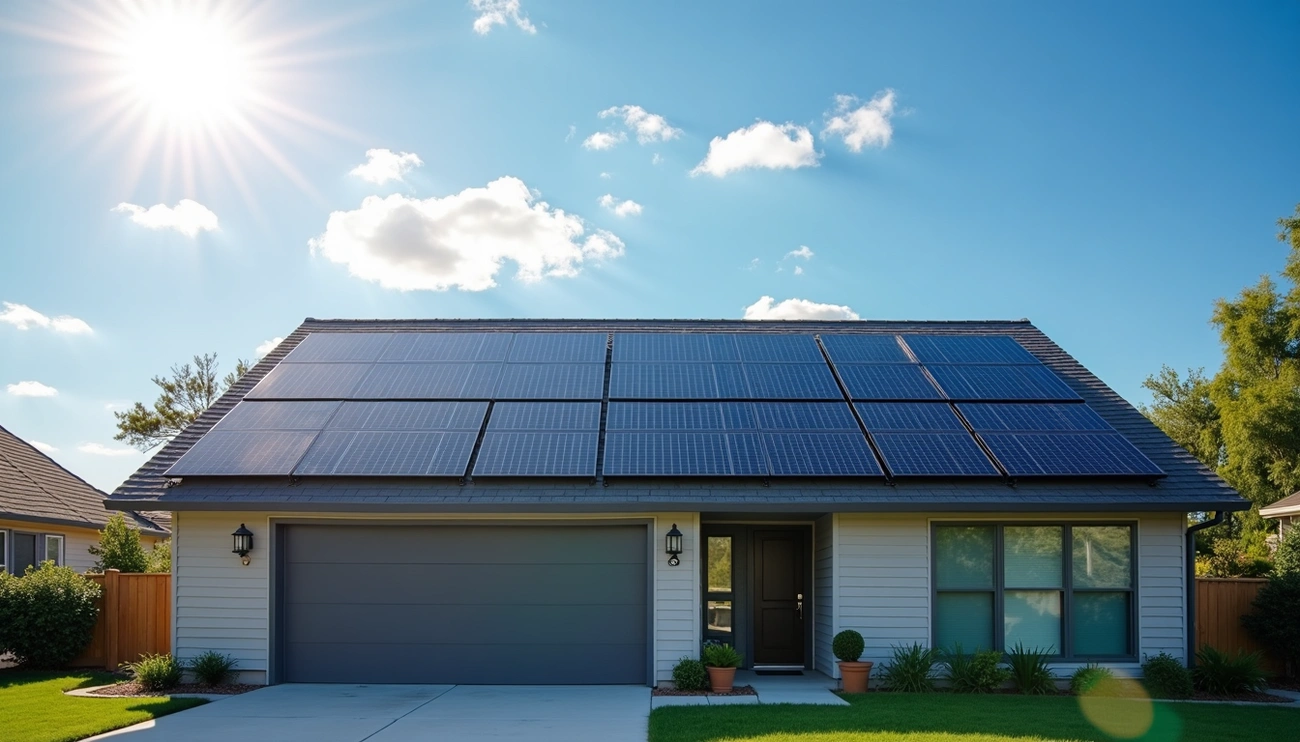
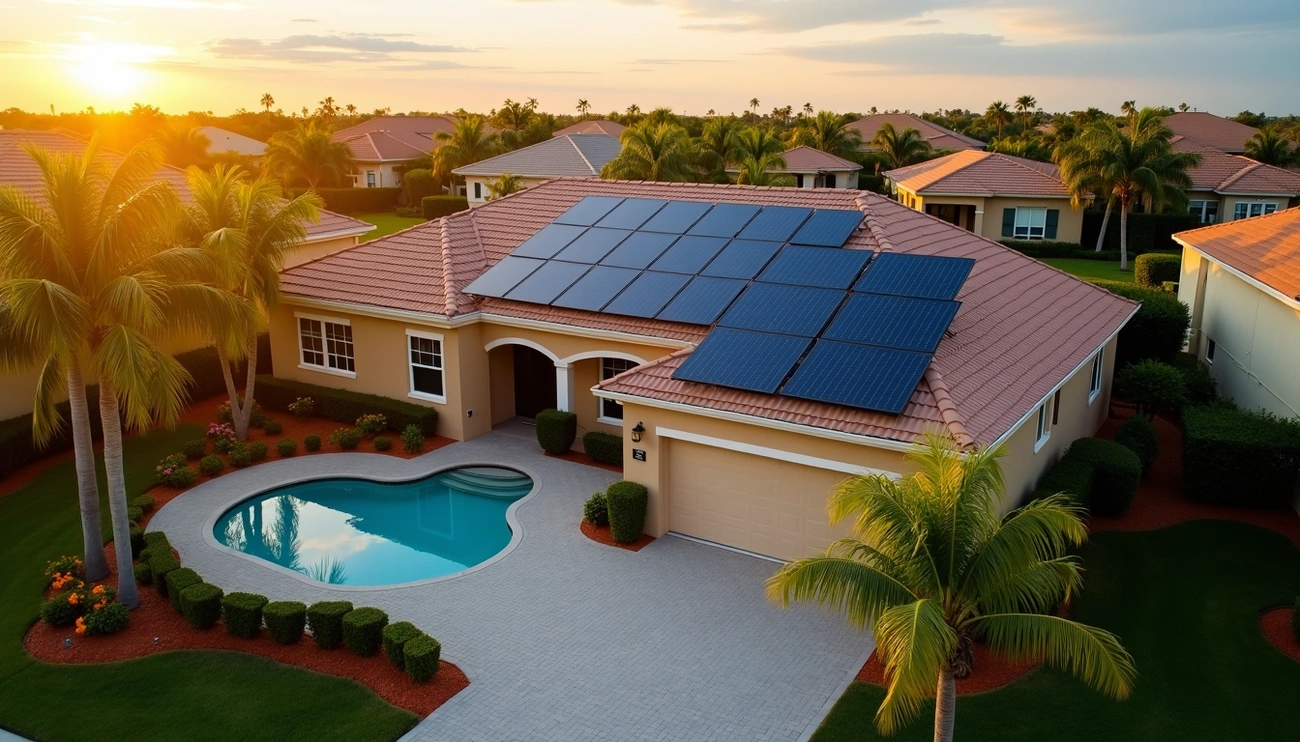
Solar panels increase home value in Florida because buyers pay more for homes with lower electricity costs. Studies show solar homes sell for about 4.1%–4.6% more than comparable non-solar homes. In Florida, this premium often adds $15,000–$25,000 in value due to high demand for lower air-conditioning energy costs.
How Much Do Solar Panels Increase Home Value in Florida
Research across Florida markets reveals compelling data about solar panel value increases. Nationally, homes with solar panels sell for 6.9% more than comparable homes without them, translating to approximately $29,000 for a median-valued home. This represents a significant jump from the 4.1% figure found in earlier 2019 studies.
Average home value increase in Florida
Florida homeowners see tangible returns when adding solar panels to their properties. In Central Florida, homes with solar sold for about 4.1% more than comparable properties without it. The average premium buyers are willing to pay amounts to $9,274 for solar-equipped homes. However, this figure varies considerably based on location and system specifications. Some Florida properties experience value increases ranging from $10,000 to $15,000.
Florida solar premium compared to national average
Florida ranks No. 6 on the top 10 states with highest solar premiums. The state averages a 4% solar premium overall, though this varies by region. Orlando specifically commands a higher premium at 4.6%. While these figures sit below the national average of 6.9%, they reflect Florida’s unique market dynamics, including limited net metering and hurricane considerations that temper buyer enthusiasm despite abundant sunlight.
Property value increase per kilowatt installed
The per-watt valuation method provides another lens for understanding solar’s impact. Research from Lawrence Berkeley National Lab found that solar systems add between $2.68 and $4.31 per watt to home values. The national average sits at $3.78 per watt. For a typical 5-kilowatt system in Florida, which costs around $10,900 before incentives, this translates to approximately $18,900 in added value using the average per-watt premium.
Real estate data from Florida markets
Specific market data illustrates how solar premiums vary across Florida cities. In Miami, where the median home value reaches $556,582, solar systems can add up to $15,000. Tampa properties, with a median listing price of $420,000, benefit from the principle that each $1 reduction in annual utility costs adds $20 to home value. Orlando homes averaging $369,000 see value increases aligned with the state’s 4.1% premium. Jacksonville and Tallahassee properties with 5-kilowatt systems can expect approximately $18,900 in added value based on per-watt calculations.
Why Solar Panels Increase Home Value
Buyers pay premium prices for solar-equipped homes for several concrete reasons that extend beyond simple environmental consciousness.
Lower monthly energy bills
The most tangible benefit driving buyer interest is immediate cost reduction. Homeowners with solar panels save approximately $1,820 annually on electric bills when systems offset average household consumption of 10,715 kWh. In particular, solar installations reduce electricity bills by 50-80%, creating substantial monthly savings. With national electricity rates averaging $0.17 per kWh, solar systems generate power at approximately $0.06 to $0.07 per kWh. This $0.11 difference per kilowatt-hour translates to significant savings over decades. Buyers recognize these immediate financial benefits, purchasing homes where energy costs start low from day one.
Energy efficiency and buyer demand
Market research reveals strong buyer preferences for energy-efficient properties. Specifically, 63% of real estate agents report that promoting energy efficiency in listings is valuable. More than 80% of U.S. home buyers consider energy efficiency an important purchase factor. Solar panels represent a tangible upgrade, comparable to renovated kitchens or finished basements. This demand stems partly from environmental priorities, particularly among millennials and Gen Z buyers who prioritize reducing carbon footprints without additional effort.
Energy independence and security
Recent grid failures and power outages have heightened awareness around energy reliability. Solar panels, especially when paired with battery storage, offer resilience during grid disruptions. Homeowners gain control over their energy source rather than depending solely on utilities. This independence provides stability and peace of mind as electricity demand grows and infrastructure faces increasing strain.
Protection from rising utility rates
Residential electricity prices have increased by 2.85% annually over the last 25 years. By contrast, solar locks in energy costs through levelized cost of energy (LCOE), effectively purchasing 25 years of electricity at current prices. As a result, while utility customers face unpredictable rate increases, solar homeowners maintain fixed, predictable energy expenses. Each utility rate hike actually accelerates the return on investment for existing solar systems.
Factors That Affect Solar Panel Value Increase
Not all solar installations contribute equally to home value. Several critical factors determine whether your solar panel installation in Florida maximizes resale potential.
System ownership vs leasing
Ownership structure fundamentally affects how much solar increases home value. Owned solar systems qualify for inclusion in property appraisals, while leased systems do not. Fannie Mae guidelines explicitly state that leased panels or those under power purchase agreements cannot be included in the appraised value of the property. Homes with third-party-owned solar showed no value increase compared to homes without solar. When you own your system outright, either through cash purchase or a fully paid loan, it becomes a transferable asset. Buyers don’t inherit monthly lease obligations or need to qualify for lease assumption, which often complicates transactions and reduces buyer interest.
Solar panel system size and age
System specifications directly impact contributory value. Research shows homes earn approximately $4.00 per watt of installed capacity, though some studies report $3.78 per watt. System age plays a smaller role than expected. Solar installations over five years old still earned a 5% to 6% premium, while newer systems saw 7% to 9% increases. Even 10-year-old systems add value because panels degrade slowly, still producing 90-95% of original output.
Roof condition and optimal placement
Florida’s climate creates unique considerations. Insurers require proof that solar systems meet wind mitigation standards for hurricane resistance. Appraisers evaluate whether panels are optimally placed for energy production, and buyers assess remaining roof lifespan under the panels.
Local market trends in Florida
Florida buyers recognize solar’s value given high air conditioning costs. Owned systems with proper documentation help homes sell faster. However, appraiser familiarity with solar valuation varies across Florida markets.
Property appraisal considerations
Appraisers must compare energy-efficient features across comparable properties and cannot adjust value solely on equipment cost or dollar-for-dollar savings. They analyze actual market reaction to the energy feature. Proper documentation of system specifications, production data, and warranties helps appraisers accurately assess contributory value.
Florida Solar Incentives and Tax Benefits
Financial incentives make solar panel installation in Florida substantially more affordable, reducing upfront costs and accelerating return on investment.
Federal Solar Tax Credit
The federal Residential Clean Energy Credit provides a 30% tax credit on total solar installation costs through 2032. This credit drops to 26% in 2033 and 22% in 2034. The credit covers solar panels, inverters, batteries with at least 3 kilowatt-hours capacity, installation labor, and permitting fees. For a $25,000 system, you receive a $7,500 tax credit. The credit is non-refundable but carries forward to future tax years if it exceeds your tax liability[192].
Florida property tax exemption
Florida offers a 100% property tax exemption on solar system value through 2037. This means solar panels can increase your home value without raising property taxes. The exemption covers photovoltaic modules, inverters, storage devices, and all installation components.
Net metering programs
Florida’s major utilities provide full retail rate credits for excess solar electricity sent to the grid. FPL credits residential customers at approximately 10.8 cents per kilowatt-hour. Credits roll over monthly within the same calendar year. At year-end, utilities pay wholesale rates for remaining credits, typically 30% of retail value.
Local utility rebates
Boynton Beach offers a $1,500 rebate for qualifying solar systems[242]. Dunedin provides up to $2,500 based on system size at $0.25 per watt[242]. Orlando Utilities Commission offers $2,000 rebates for battery storage systems.
Conclusion
Solar panels unquestionably increase home value in Florida, with owned systems adding around $9,454 on average to your property’s worth. Beyond resale value, you’ll enjoy immediate energy savings, protection from rising utility rates, and access to substantial tax incentives. Before installing solar panels, make sure you understand the difference between ownership and leasing. Choose owned systems to maximize your investment and appeal to future buyers. All things considered, solar represents a smart financial decision for Florida homeowners looking to reduce costs while building equity.