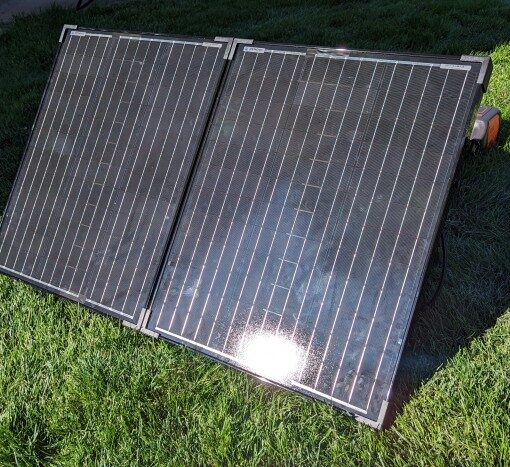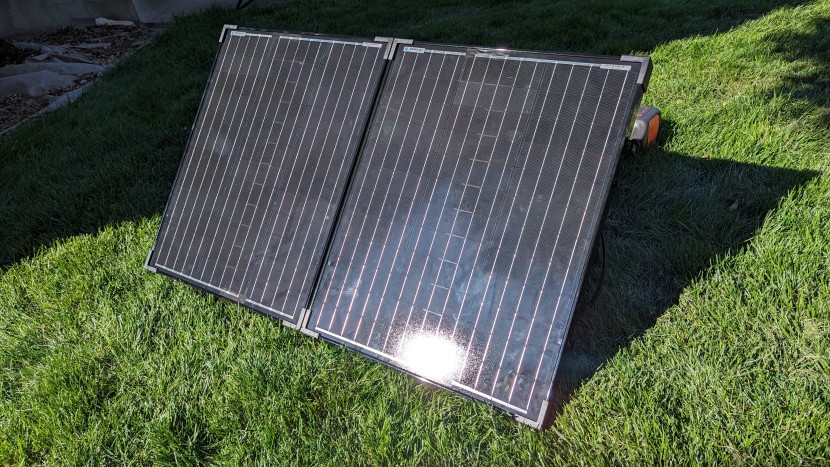
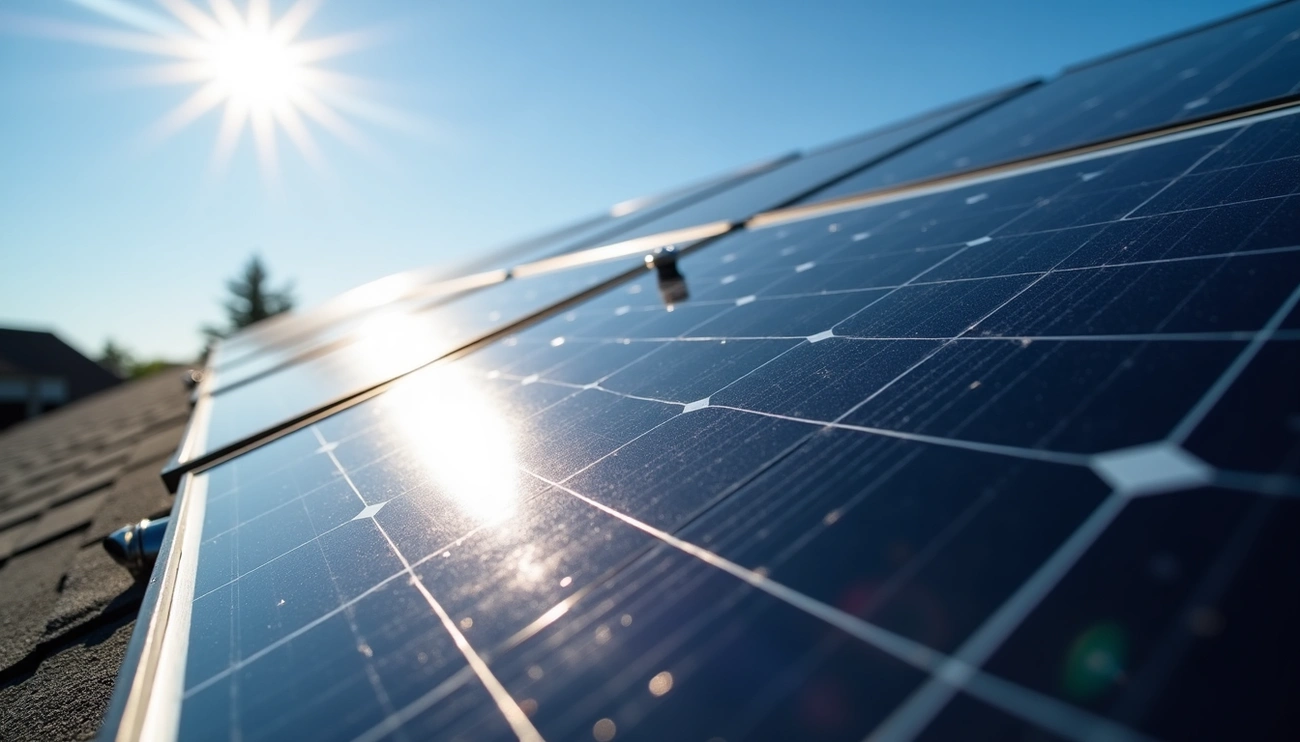
Solar panels can reach temperatures above 149°F (65°C) in direct sunlight, but solar panels do not typically overheat or break from heat alone. High temperatures reduce solar panel efficiency by 10%–25% on hot days because heat increases electrical resistance in photovoltaic cells and lowers power output.
How Hot Can Solar Panels Get in Real-World Conditions
Typical Operating Temperature Range
Solar panels maintain a typical operating temperature between 59°F and 95°F (15°C to 35°C) under normal conditions. However, this doesn’t tell the complete story. Panels actually operate 20-40°C above the ambient air temperature surrounding them. What this means for you: on a 86°F day, your panels could reach 122-158°F.
The optimal performance temperature sits at 77°F (25°C). Below this threshold, panels actually produce more electricity than their rated capacity. Between 77°F and 95°F, you’ll see slight efficiency reductions but still excellent performance. Above 95°F, efficiency losses become more noticeable.
Maximum Surface Temperature Limits
Under intense sunlight and high ambient temperatures, solar panel surfaces can reach 149°F to 167°F (65°C to 75°C). Some sources report panels reaching up to 150°F or higher during peak summer conditions. On a 95°F day, your panel surfaces might exceed 140°F.
Most panels are designed to operate safely up to 185°F (85°C). This design threshold provides a significant safety margin. When panels exceed 194°F (90°C), critical issues can occur, including solder bond failure and encapsulant degradation. Fortunately, these extreme temperatures rarely occur in typical installations.
Factors That Influence Panel Temperature
Multiple variables determine how hot your panels get during operation:
- Solar irradiance levels: Higher sun intensity directly increases heat generation, with peak irradiance reaching 1,200-1,400 W/m²
- Wind speed: Natural cooling through wind can reduce panel temperature by 5-11°C at just 1 m/s
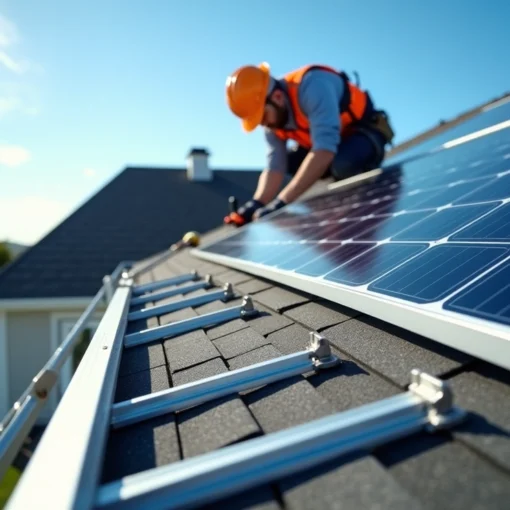
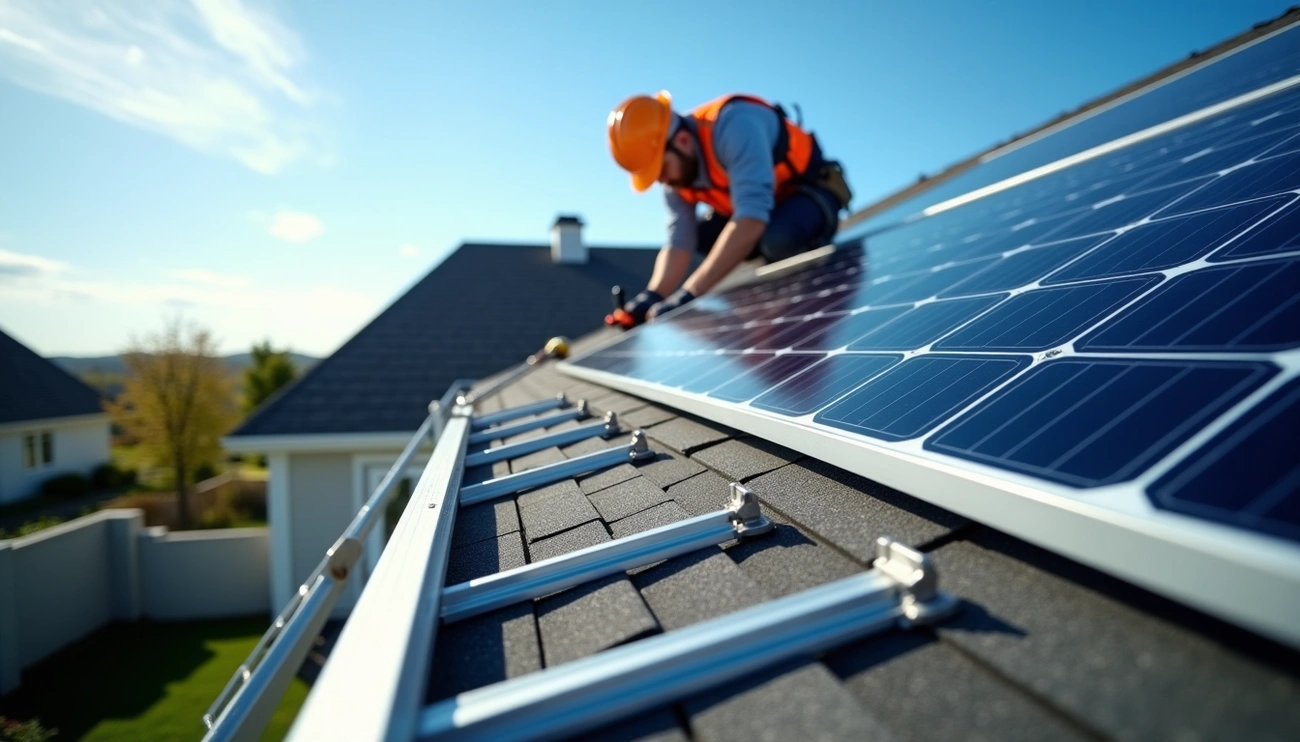
- Installation method: Roof-mounted panels run 5-10°C hotter than ground-mounted systems due to restricted airflow[11]
- Panel orientation: Panels facing the sun directly (south-facing in the Northern Hemisphere) get hotter than those oriented differently
- Frame color: Black frames absorb more heat than silver frames, potentially increasing temperature by 2-3°C
- Roof type: Certain roofing materials trap heat, while metal roofs better reflect sunlight and help panels stay cooler
- Geographic location: Proximity to the equator means more direct sunlight and higher panel temperatures year-round
Coupled with these factors, the spacing beneath your panels matters significantly. Installations with at least 6 inches of clearance allow airflow for cooling.
Understanding Solar Panel Temperature Coefficients
What Temperature Coefficient Means
Manufacturers test panels at Standard Test Conditions: 25°C cell temperature and 1,000 W/m² irradiance. The temperature coefficient quantifies performance changes when cell temperature rises above this baseline. Expressed as a percentage per degree Celsius, this value appears on every module datasheet.
Most panels carry coefficients between -0.3% and -0.5% per °C. The negative sign indicates power decreases as temperature increases. Specifically, three coefficients exist: open-circuit voltage (Voc), short-circuit current (Isc), and maximum power output (Pmax). Among these, Pmax directly impacts your energy production.
How Temperature Coefficient Affects Power Output
Power output decreases linearly with temperature, typically by 0.4-0.5% per degree Celsius. Voltage drops significantly as temperature rises, while current increases slightly. Since power equals voltage multiplied by current, the voltage decrease dominates, reducing overall output.
Here’s a practical example: A 260W panel with a -0.41%/°C coefficient operating at 65°C experiences a 40°C temperature difference from standard conditions. The calculation: 40°C × -0.41% = -16.4% power loss. Your 260W panel produces only 217W at this temperature.
Cell temperature often reaches 60-70°C on sunny days, especially on dark rooftops with limited airflow. During these conditions, efficiency loss becomes substantial.
Comparing Temperature Coefficients Across Brands
Different technologies demonstrate varying heat resistance. HJT panels lead with coefficients between -0.24% and -0.28% per °C. TOPCon modules range from -0.30% to -0.33% per °C. Traditional PERC panels fall between -0.35% and -0.45% per °C.
Brand-specific performance varies considerably:
| Technology | Temperature Coefficient | Power Loss (25°C to 65°C) |
|---|---|---|
| HJT | -0.243%/°C | 9.72% |
| TOPCon | -0.32%/°C | 12.8% |
| IBC | -0.29%/°C | 11.6% |
| REC Alpha Pure | <citation index=”10″ link=”https://www.energysage.com/solar/solar-panel-temperature-overheating/” similar_text=”Temperature coefficients of popular solar panels Brand | Panel series |
| Panasonic Evervolt | -0.24%/°C [62] | Lower loss |
For hot climates, panels with coefficients of -0.30%/°C or better deliver optimal performance.
Do Solar Panels Overheat? Separating Fact from Fiction
Why Solar Panels Don’t Actually Overheat
Solar panels don’t overheat, per se. They can withstand ambient temperatures up to 149 degrees Fahrenheit (65°C). The confusion arises because people equate “getting hot” with “overheating.” In reality, panels are manufactured to handle high temperatures without system failure. Most panels have a rated maximum temperature of 185 degrees Fahrenheit. Hot weather will not cause your system to overheat; it will only slightly affect efficiency.
The Difference Between Heat Tolerance and Overheating
Heat tolerance refers to a panel’s ability to function at elevated temperatures without damage. Overheating implies malfunction or shutdown. Your panels won’t shut off or malfunction if temps rise high; they just won’t work as well. The reduction in output is minimal, only about 0.5%, so you probably won’t notice your panels performing any worse. Panels are designed to withstand the sun shining on them and be exposed to higher temperatures.
Thermal vs Photovoltaic Panels: Understanding the Risks
Photovoltaic solar panels bear no risk of overheating because they do not contain circulating water. They simply evacuate heat from each side of the panel. Whereas thermal solar panels (used for heating water) carry genuine overheating risk due to their fluid-filled systems. Thermal panels can reach dangerous stagnation temperatures when water demand stops. This distinction matters: if you have standard PV panels, overheating isn’t your concern.
When High Temperatures Become a Concern
Extreme increases in temperature can damage the cell and other module materials, leading to shorter operating lifetimes. Prolonged exposure to excessive heat causes panels to degrade at a faster rate. The heat causes materials to expand and contract, which puts physical stress on cells and can lead to microcracks. Hot spots can occur in extreme temperatures which may lead to cell fractures. Component failures accelerate at elevated temperatures, with bypass diodes failing above 128°C junction temperatures.
How to Protect Your Solar Investment from Temperature-Related Issues
Protecting your solar investment requires strategic decisions during selection and ongoing maintenance.
Choose Panels with Lower Temperature Coefficients
N-type TOPCon panels offer temperature coefficients around -0.29%/°C, meaning less power loss as temperatures climb. HJT technology delivers coefficients as low as -0.25%/°C, while PERC panels typically range around -0.35%/°C. In hot climates, this difference translates to 1-2 GWh more annual generation per 100 MW installation.
Ensure Proper Installation and Ventilation
Airflow underneath panels directly impacts operating temperature. Increasing air gaps from 2 cm to 20 cm reduces panel temperature by up to 10°C. Studies confirm proper spacing prevents efficiency losses of 0.3-0.5% per degree Celsius. Ground-mounted systems naturally run cooler than roof installations due to better ventilation.
Select Tier 1 Panel Manufacturers
Tier 1 status indicates financial stability and reliable warranty support. These manufacturers maintain large-scale production capabilities and proven track records. Furthermore, Tier 1 panels minimize risks of defects or manufacturer bankruptcies, ensuring your 25-year warranty remains valid.
Consider Your Local Climate Conditions
Hot regions require panels with superior heat tolerance and lower temperature coefficients. Site-specific assessment proves crucial since climate impacts vary regionally.
Monitor System Performance Regularly
Monitoring platforms track energy production, performance ratios, and system efficiency. Early detection of temperature-related drops allows rapid response before significant losses occur.
Conclusion
Solar panels won’t overheat and fail, but indeed, they will lose efficiency as temperatures climb. Now that you understand temperature coefficients and real-world operating conditions, you can make smarter decisions about your solar investment. Choose panels with lower temperature coefficients, ensure proper ventilation during installation, and monitor performance regularly. By and large, these strategies will protect your system’s output and maximize your return for decades to come.