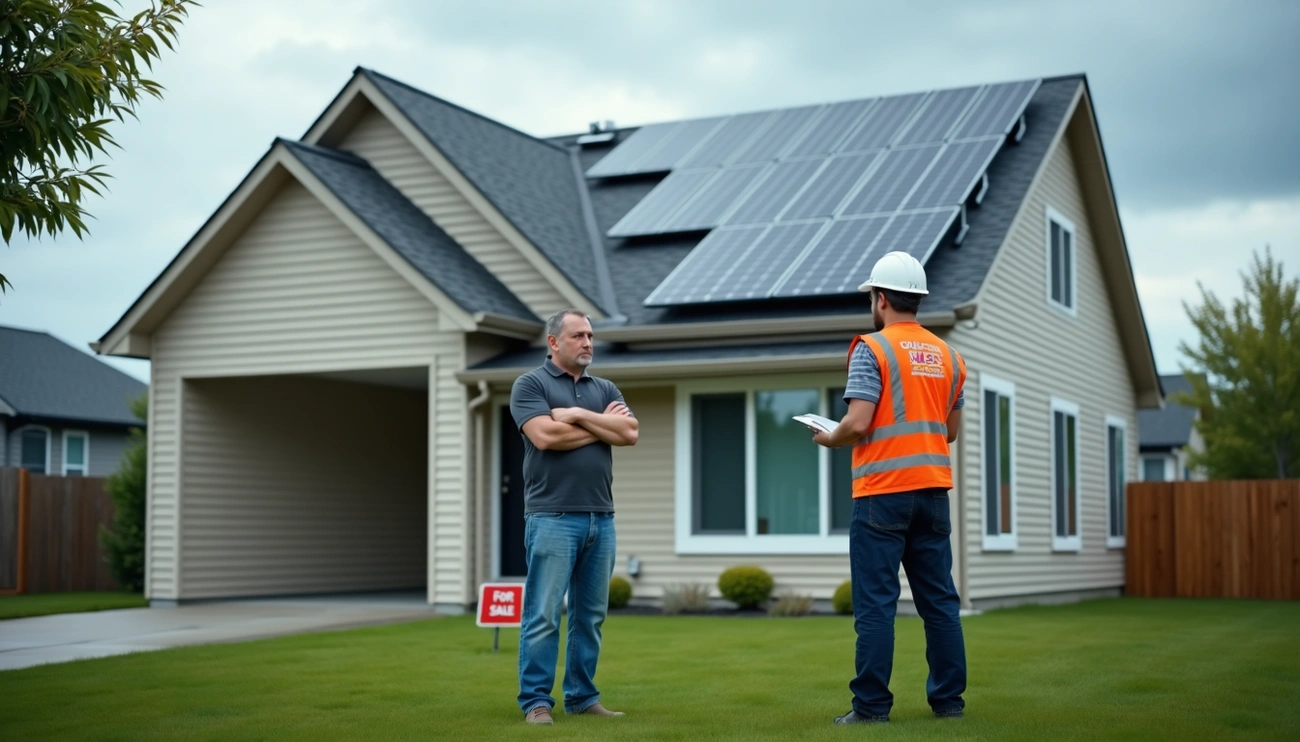
Yes, solar panels can be repossessed if you stop making payments on a loan or lease. Lenders often file a UCC lien, treating the system as collateral similar to a car. While physical removal is uncommon, lenders can legally reclaim the system or pursue remaining debt through legal action.
What does it mean to repossess solar panels?
Repossession fundamentally refers to the act of a lender taking back property when a borrower defaults on payments. For solar panels, this occurs primarily in situations where the system was financed through a loan or lease agreement rather than purchased outright.
How repossession works in general
When you stop making payments on a secured loan, lenders have the legal right to reclaim the collateral backing that loan. For solar installations, lenders typically secure their interest by filing a UCC-1 financing statement, creating a lien specifically on the solar equipment. This legal notice publicly declares their right to seize the panels if you default. Essentially, it serves as protection for the lender, ensuring they can recoup their investment if payments stop.
Solar panel repossession vs. other assets
Solar panels present unique challenges compared to repossessing other assets like vehicles. Courts typically evaluate three main factors to determine if solar panels qualify as fixtures (permanent parts of the property) or chattels (removable personal property):
- Physical attachment: How permanently the panels are attached
- Adaptation: Whether panels are specifically customized for the property
- Original intent: What the parties intended regarding permanence
Notably, in practice, lenders rarely pursue actual repossession of solar panels despite having the legal right. This is because:
- Used solar panels have minimal resale value
- Removal is costly and risks damaging the roof
- The process is logistically difficult and often not worth the expense
When repossession becomes a risk
The risk of repossession varies significantly based on your financing arrangement. If you purchased panels outright or fully paid off your loan, repossession is impossible since you own them completely. Conversely, with outstanding loans, leases, or Power Purchase Agreements (PPAs), the risk increases substantially if you default.
Despite threats, many lenders prefer to leave panels in place and pursue legal action for the unpaid balance rather than physically removing them. This approach allows them to maintain a lien that clouds your property title until the debt is resolved, potentially complicating future home sales or refinancing.
How your solar financing affects repossession risk
Your financing method dramatically impacts whether your solar panels can be repossessed. Understanding these distinctions is crucial before signing any solar agreement.
Outright purchase: no repossession risk
First and foremost, purchasing solar panels outright eliminates repossession risk entirely. Once you’ve paid in full, the panels become your personal property. Without any ongoing financial obligation, there’s no possibility of repossession—giving you complete ownership security.
Solar loans: secured vs. unsecured
The type of solar loan you choose substantially affects your repossession risk. Secured solar loans require collateral—either your solar equipment or your home itself. These loans offer attractive terms including lower interest rates (typically 3-8% APR) and longer repayment periods (up to 25 years). The trade-off? If you default, the lender can legally repossess your panels or, in some cases, foreclose on your home.
Unsecured solar loans don’t require collateral but come with higher interest rates (typically 6-20% APR) and shorter repayment terms (2-12 years). Although your home isn’t at risk, defaulting still damages your credit score.
Leases and PPAs: who owns the panels?
With solar leases and Power Purchase Agreements (PPAs), you never actually own the equipment. These arrangements typically last 15-20 years with no down payment. The solar company maintains ownership of the system throughout the agreement. This means they can remove the equipment if you fail to meet your contractual obligations. Additionally, these arrangements complicate home sales as new buyers must qualify for and agree to take over your contract.
What happens if I stop paying my solar loan?
Defaulting on solar loans triggers a cascade of consequences. For secured loans, lenders may repossess your panels or even your home depending on the collateral. Yet interestingly, many lenders avoid immediate repossession. Instead, they place a UCC-1 lien on your system and wait until you sell your home. At closing, this lien emerges, forcing you to pay the full amount—including penalties and interest—before completing the sale.
Legal and financial consequences of defaulting
Defaulting on solar panel payments triggers several significant legal and financial consequences beyond the possibility of repossession. Understanding these implications is essential for homeowners facing payment difficulties.
Can solar panels be repossessed in Texas?
Theoretically, yes—most solar panel loan contracts in Texas include language establishing a lien against the equipment. Yet, according to attorneys, lenders rarely follow through with actual repossession. Even though solar companies file UCC documents with the Texas Secretary of State giving notice of their right to repossess, they typically prefer pursuing other collection methods.
Understanding UCC-1 filings and liens
A UCC-1 filing is a legal document that establishes a lender’s security interest in your solar equipment. Once filed, it gives lenders the right to repossess panels if you default. Furthermore, these filings appear in title searches and remain active for five years unless renewed. Primarily used with leased systems and financed purchases, they protect lenders’ investments throughout your payment term.
Impact on home title and resale
Perhaps the most troublesome consequence of defaulting involves your home’s title. Solar liens can create a “cloud on title,” complicating or preventing property sales. During home sales, these liens must typically be settled fully before closing. Moreover, many buyers refuse properties with existing solar liens, potentially forcing homeowners to pay off the entire remaining balance.
Credit score and legal risks
Missed solar payments generally get reported to credit bureaus, potentially dropping your score by 100+ points. These negative marks remain on your report for up to seven years. Consequently, defaulting impacts not just your current financial situation but your long-term borrowing capability.
The FTC Holder Rule explained
The Federal Trade Commission’s “Holder Rule” provides crucial protection for solar customers. This regulation allows you to assert claims against your lender for problems with the solar system or installer misconduct. In essence, it links the seller’s duty to deliver a working product with your obligation to pay. Through this rule, you may have legal grounds to pause payments on non-functioning systems without weakening your legal position.
What to do if you’re struggling with payments
Facing difficulties with your solar panel payments doesn’t mean repossession is inevitable. Several options exist to help homeowners navigate financial challenges with their solar investments.
Communicate with your lender early
Initially, contact your solar financing company at the first sign of payment trouble. Many lenders prefer working with borrowers rather than pursuing costly repossession. When communicating, explain your situation clearly and have documentation ready. Importantly, if you continue making payments while disputing issues, ensure they’re made “under protest” to preserve your right to seek refunds later.
Options for refinancing or restructuring
Consider refinancing your solar loan through these methods:
- HELOC (Home Equity Line of Credit): Often offers lower interest rates (4-6.5% APR) than original solar loans
- Cash-out refinancing: Consolidates your mortgage and solar loan into one payment
- Home renovation mortgage: Provides higher LTV ratios than cash-out options
Many credit unions offer specialized solar refinance programs with terms up to 20 years and financing up to $75,000.
Bankruptcy and solar panel loans
Bankruptcy may provide relief from overwhelming solar debt. Chapter 7 bankruptcy allows you to surrender panels or potentially redeem them for their current market value. Alternatively, Chapter 13 lets you pay the actual value of panels (often much less than the loan balance) over 3-5 years. Some law firms have successfully reduced solar debts from $50,000 to just $1,000.
When to seek legal help
Promptly seek legal counsel if your solar company misrepresented costs or benefits. Many solar loans involve TILA (Truth in Lending Act) violations regarding fee disclosures. An experienced attorney can review your documentation, identify potential legal claims, and help protect your credit score from negative reporting due to disputed payments.
Conclusion
Solar panel repossession remains more of a theoretical threat than a common practice. Although lenders possess legal rights to reclaim panels after payment defaults, practical challenges often make actual repossession financially unviable. The type of financing agreement ultimately determines your level of risk. Outright purchases eliminate repossession concerns completely, while secured loans, leases, and PPAs create varying degrees of vulnerability.
Most importantly, those UCC-1 filings can significantly impact your property’s title and future sale prospects. These liens persist regardless of whether physical repossession occurs, potentially forcing full payment of outstanding balances during property transfers.
Homeowners struggling with payments should act quickly rather than waiting until default. Early communication with lenders, exploration of refinancing options, or legal consultation can prevent the worst outcomes. Additionally, federal protections like the FTC Holder Rule may provide valuable leverage when dealing with non-functioning systems or installer misconduct.