Yes, solar panels can power an entire commercial building when system size matches energy demand. Success depends on roof or land space, local sun exposure, panel efficiency, and battery or grid backup. Smaller buildings may reach 100% solar, while larger buildings typically offset most costs using solar with grid support.
How commercial solar panels work in large buildings
Commercial building solar systems operate through a sophisticated process that transforms sunlight into usable electricity. Unlike smaller residential setups, these systems are designed to handle the substantial energy demands of office complexes, manufacturing facilities, and retail spaces.
Solar energy generation and conversion
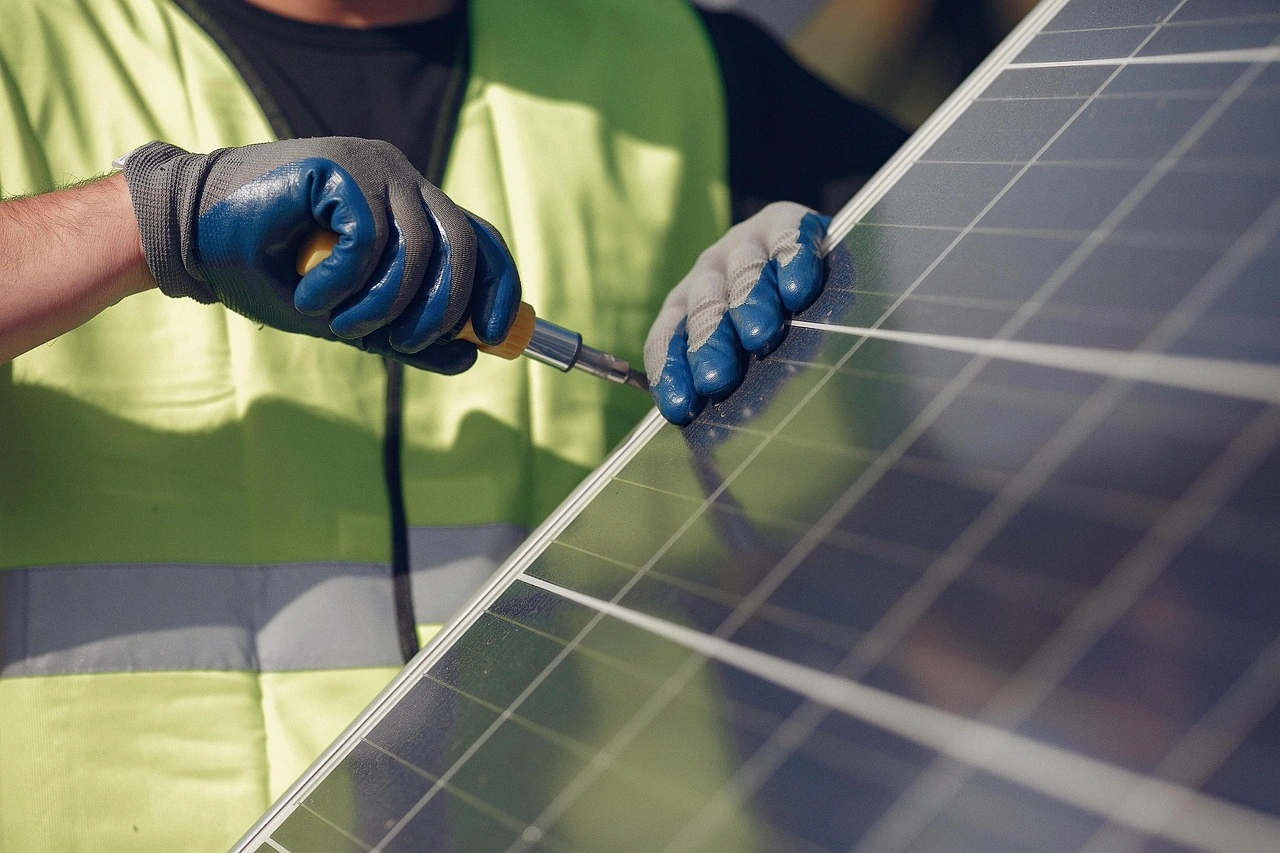
The foundation of any commercial solar installation begins with photovoltaic (PV) panels mounted on rooftops or other suitable locations. These panels contain solar cells made primarily from silicon that convert sunlight directly into electricity through the photovoltaic effect. When photons from sunlight strike the cells, they energize electrons, creating direct current (DC) electricity.
Commercial solar panels typically feature two main types of cells: monocrystalline and polycrystalline. The distinction lies in how silicon crystals are formed during manufacturing, resulting in different appearances and slight performance variations. Both effectively generate electricity, though monocrystalline panels are often preferred for commercial installations due to their durability and higher output capacity.
This conversion process occurs silently and without moving parts. Each panel contains multiple cells arranged in series, with the visible grid pattern serving as the actual energy conversion surface. Modern commercial panels are engineered to withstand harsh weather conditions while maintaining consistent energy production.
Role of inverters and grid connection
Since solar panels generate DC electricity but commercial buildings operate on alternating current (AC), inverters serve as the critical bridge between these two forms. Inverters accomplish the DC-to-AC conversion by rapidly switching the direction of electrical flow, creating the sine wave pattern required by the grid and building systems.
Several inverter configurations exist for commercial applications:
- String inverters – Cost-effective for large installations, connecting multiple panels in series
- Central inverters – Ideal for extensive commercial deployments with consistent sun exposure
- Microinverters – Attached to individual panels to optimize performance, especially with complex rooftops or partial shading
- Hybrid inverters – Combine solar and battery inverter functions for seamless energy storage integration
Most commercial buildings utilize grid-connected systems where the inverter synchronizes with the utility grid’s voltage and frequency, enabling bidirectional power flow. During peak production, excess electricity can flow back to the grid (often generating credits through net metering), while supplementary power is drawn during low-production periods.
Battery storage and energy management
Battery storage systems fundamentally transform how commercial solar installations operate by decoupling energy production from immediate consumption. These systems capture excess electricity during high-production periods for use when solar generation is insufficient, essentially time-shifting solar power.
Modern commercial installations increasingly utilize lithium-ion batteries due to their superior charging speed, deeper discharge capability, and minimal maintenance requirements. These systems provide critical benefits:
- Peak demand reduction by discharging stored energy during high-usage periods, lowering costly demand charges
- Emergency backup power during grid outages, maintaining essential operations
- Enhanced grid interaction through services like frequency regulation and voltage support
Tying everything together are solar energy management systems (EMS) that serve as the brain of commercial installations. These sophisticated platforms monitor production, predict demand patterns, and optimize energy flow in real-time. Through advanced analytics and machine learning algorithms, the EMS determines when to use solar power directly, store excess energy, or draw from the grid based on constantly changing conditions.
Can solar panels fully power a commercial building?
The question of whether solar panels can fully power a commercial building depends on several interconnected factors. As businesses increasingly explore clean energy options, understanding the relationship between energy production and consumption becomes crucial for making informed decisions about commercial solar investments.
Energy demand vs. solar output
Solar offset—the percentage of a building’s electricity needs met by solar panels—varies significantly across commercial properties. Surprisingly, only about 20% of buildings with onsite renewable systems generate enough energy to meet more than half of their total electricity needs. The majority (55%) produce less than a quarter of their required electricity through solar.
Different building types achieve varying levels of offset based on their energy profiles. Self-storage facilities lead the pack, generating approximately 60% of their electricity needs from onsite renewables, whereas hospitals typically achieve only 7% offset given their intensive energy requirements. This disparity highlights how building function impacts potential solar coverage.
Solar production follows predictable seasonal patterns, with panels generating approximately 65% of their annual electricity during spring and summer months, leaving just 35% for fall and winter. Additionally, the mismatch between peak production times (daytime) and peak usage periods (often evenings) creates another challenge for buildings seeking complete solar independence.
Factors that determine full energy offset
Several key elements influence whether a commercial building can achieve 100% solar power:
- Available installation space: Roof size and configuration often limit system capacity, with many businesses using less than their ideal panel count because of space constraints.
- Utility regulations: Many utility companies restrict maximum system sizes, potentially preventing full offset designs regardless of available space.
- Net metering policies: How utilities credit excess solar production affects financial viability of larger systems, particularly as time-of-use billing can create disparities between daytime production value and evening consumption costs.
- Storage capabilities: Battery systems transform how commercial installations operate by decoupling energy production from immediate consumption, enabling higher effective offset percentages.
The ENERGY STAR program notes that buildings with renewable systems typically score higher on efficiency metrics, suggesting businesses often optimize energy usage before installing solar—a critical step toward achieving full power from renewables.
Examples of buildings powered entirely by solar
Despite challenges, numerous commercial properties have achieved 100% renewable power. Anette’s Chocolate Factory in Napa, California demonstrates that even manufacturing facilities can meet their full electrical needs through solar, with their 54.3 kW system providing complete coverage. Similarly, several wineries and small commercial operations have reached full offset.
On a larger scale, Apple’s headquarters in Cupertino features one of the world’s largest corporate solar arrays, generating 16 megawatts of power. The campus supplements this with 4 megawatts of biogas fuel cells and additional off-site renewable sources.
Tesla’s Gigafactory in Nevada represents perhaps the most ambitious commercial solar project, designed as a net-zero energy facility from inception. The company intentionally avoided building natural gas pipelines to the facility, “forcing it” to rely entirely on renewables through massive rooftop arrays and hillside installations.
Key factors that affect solar system performance
The effectiveness of solar panels on commercial buildings hinges on several critical variables that collectively determine energy output and return on investment. Understanding these factors is essential for businesses seeking to maximize their renewable energy potential.
Roof size and orientation
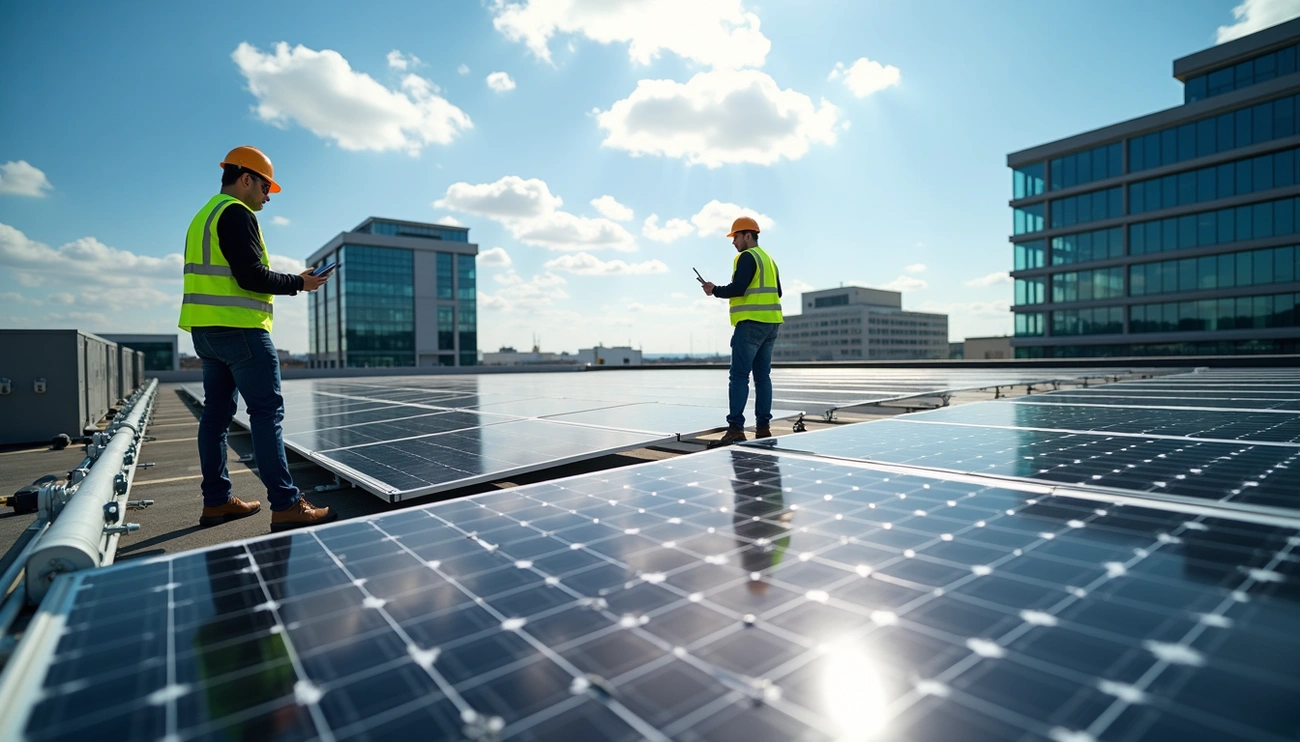
The physical characteristics of a commercial roof directly impact solar generation capacity. Commercial rooftops must have sufficient structural capacity to support solar arrays, as a typical system adds 3-4 pounds per square foot.
According to solar design experts, south-facing surfaces in the Northern Hemisphere achieve optimal sunlight exposure, although east-west configurations can still deliver effective energy profiles by capturing morning and afternoon sun.
For maximum efficiency, the ideal tilt angle typically equals the site’s latitude. On flat commercial roofs, ballasted mounting systems can achieve optimal tilt without roof penetrations, consequently preserving roof warranties.
Local climate and sun exposure
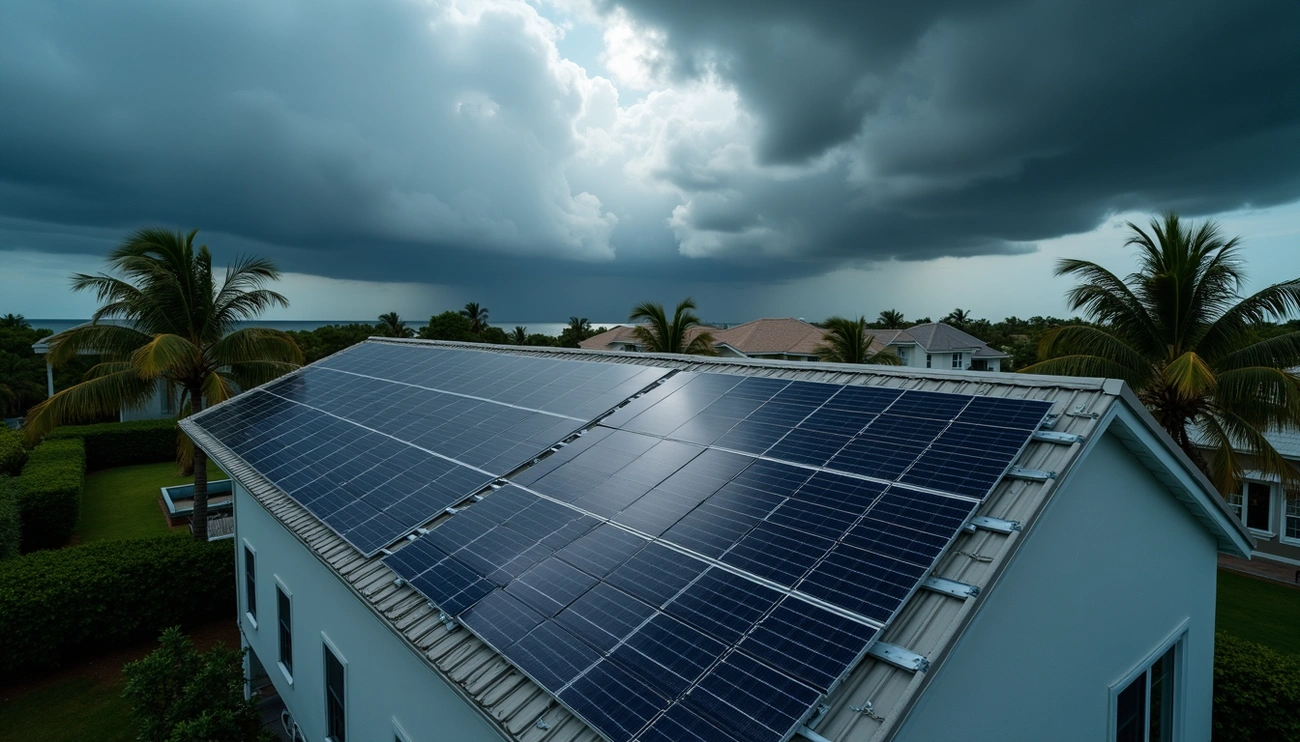
Regional weather patterns profoundly influence solar performance. High temperatures reduce panel efficiency by 0.4-0.5% per degree Celsius above the optimal 25°C (77°F) operating temperature.
In extreme cases, efficiency can drop by 3.13% at 56°C and by a staggering 69% at 64°C. Moreover, geographic location affects solar potential, with solar irradiance decreasing approximately 1-2% for each degree of latitude away from the equator.
Elevation provides notable advantages, as each 1,000 feet of elevation gain increases solar irradiance by 3-4% due to reduced atmospheric interference. Shade presents another critical consideration, potentially reducing output by 50-90% depending on cloud density.
Panel efficiency and system design
Modern commercial solar panels typically achieve 15-20% efficiency, with cutting-edge models reaching up to 25%.
Panel selection should balance cost against performance needs—monocrystalline panels offer higher efficiency (up to 22%) for space-constrained roofs, whereas polycrystalline options provide more affordable alternatives for larger areas.
Inverter choice significantly affects system performance; microinverters or power optimizers mitigate the “Christmas light effect” where shade on one panel reduces entire string output. Bifacial panels, which generate electricity from both surfaces, can boost efficiency primarily when paired with reflective roof materials.
Energy storage capacity
Battery storage fundamentally transforms commercial solar installations by decoupling energy production from immediate consumption. Studies show commercial battery systems typically store between 30-80% of daily solar generation.
This capability enables buildings to shift energy use from peak production to peak consumption periods, reducing demand charges and providing grid resilience.
Storage systems generally increase installation costs by approximately $1.20 per watt (about 33% above solar-only systems), yet they deliver critical benefits including peak demand reduction, emergency backup power, and enhanced grid interaction services.
Cost and savings of commercial solar power systems
Investing in commercial solar power systems represents a significant financial decision that balances upfront costs against long-term savings. For businesses considering this renewable energy option, understanding the financial landscape is essential for making informed decisions.
Average installation costs by system size
Commercial solar installation costs have fallen substantially, with current prices averaging $1.44 to $1.46 per watt DC in 2024-2025. Primarily driven by a 35% reduction in module pricing, total system costs typically range between $140,000 and $500,000 depending on energy demands and scale.
Determining factors include system size, panel technology, mounting requirements, and site complexity. High-efficiency panels cost more initially but yield greater energy production and, therefore, enhanced savings over time.
Available tax credits and incentives
Firstly, the federal Investment Tax Credit (ITC) remains the most valuable incentive, allowing businesses to deduct 30% of the total installed cost directly from their tax liability. This credit is scheduled to remain at 30% for projects that begin construction by July 4, 2026. Subsequently, businesses can utilize Modified Accelerated Cost Recovery System (MACRS), which enables them to depreciate 85% of the project cost over just five years.
Additional incentives often include:
- Bonus depreciation (40% in 2024, decreasing to 20% in 2026)
- State-specific rebates and property tax exemptions
- Rural Energy for America Program (REAP) grants covering up to 50% of costs
- Net metering programs that credit excess generation
Payback period and ROI expectations
The typical payback period for commercial solar installations ranges from 5 to 9 years. Roof-mounted systems average 9.01 years, whereas ground-mounted installations take slightly longer at 9.29 years. Henceforth, once the payback threshold is crossed, systems continue generating clean energy for decades, typically exceeding 25 years of operational life.
Commercial solar projects often deliver first-year returns approaching 50% when combining tax benefits and energy savings. Throughout the system’s lifetime, businesses can expect to eliminate recurring utility expenses while protecting themselves against future rate increases.
Benefits of solar panels on commercial buildings
Beyond the technical specifications and financials, solar panels on commercial buildings deliver transformative benefits that extend well beyond energy production. These advantages create a compelling business case for renewable energy adoption.
Lower operating costs
Commercial businesses typically save 20-40% on electricity bills after installing solar systems. For the average small to mid-sized business, this translates to approximately $101,259 in total electricity savings.
Even more importantly, solar locks in predictable energy costs, enabling companies to avoid rate fluctuations and effectively budget for the future. Most commercial properties achieve a full investment recovery within 4-6 years, subsequently enjoying decades of reduced operating expenses.
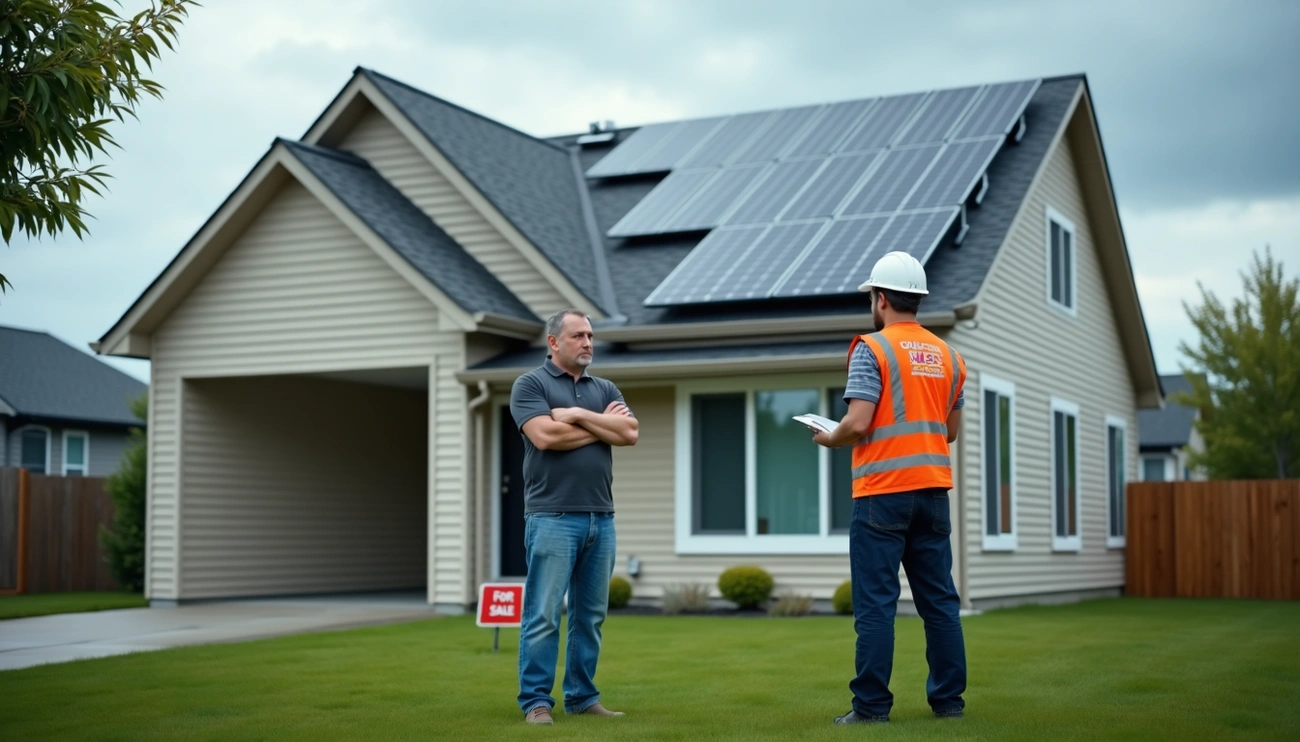
Plus, this improved financial profile can increase property values by 10-30% compared to non-solar buildings.
Improved brand image and ESG alignment
In today’s marketplace, sustainability has become a competitive advantage. Approximately 83% of consumers believe companies “should be actively shaping ESG best practices”, concerning environmental, social, and governance performance.
Concurrently, 86% of employees prefer supporting organizations that share their values. Solar installations provide measurable data for ESG reporting frameworks such as GRI (Global Reporting Initiative) or SASB, helping businesses attract eco-conscious customers, talent, and investors. This visible commitment to renewable energy serves as powerful evidence of corporate responsibility.
Energy independence and grid resilience
Commercial solar installations fundamentally reduce grid dependency, offering protection against utility disruptions. Distributed solar generation creates a more robust power network less vulnerable to widespread outages.
For critical operations, solar combined with battery storage enables businesses to maintain functionality during grid failures. In disaster-prone regions, solar-powered microgrids can operate independently, preserving essential services and preventing costly operational downtime.
Environmental impact and carbon reduction
The environmental benefits of commercial solar systems are substantial and quantifiable. Solar energy produces approximately 20 times fewer lifecycle emissions than coal-generated electricity. Over a 25-year operational period, an average commercial rooftop system can offset roughly 200,000 pounds of CO₂ equivalent emissions.
Besides carbon reduction, solar eliminates fossil fuel combustion, thereby improving local air quality. Numerous communities near solar installations report better respiratory health outcomes, demonstrating how business decisions can positively impact public wellbeing.
Conclusion
Solar panels absolutely can power commercial buildings, though complete energy offset depends on several interconnected factors. Building type, available space, local climate, and energy demands all play crucial roles in determining solar viability. Still, businesses across various industries have proven that 100% renewable power is achievable with proper planning and investment.
Financial considerations make commercial solar increasingly attractive. With installation costs averaging $1.44-$1.46 per watt and generous tax incentives covering 30% of expenses, businesses typically recoup their investment within 5-9 years. After this payback period, solar systems continue generating essentially free electricity for decades, significantly reducing operating costs.